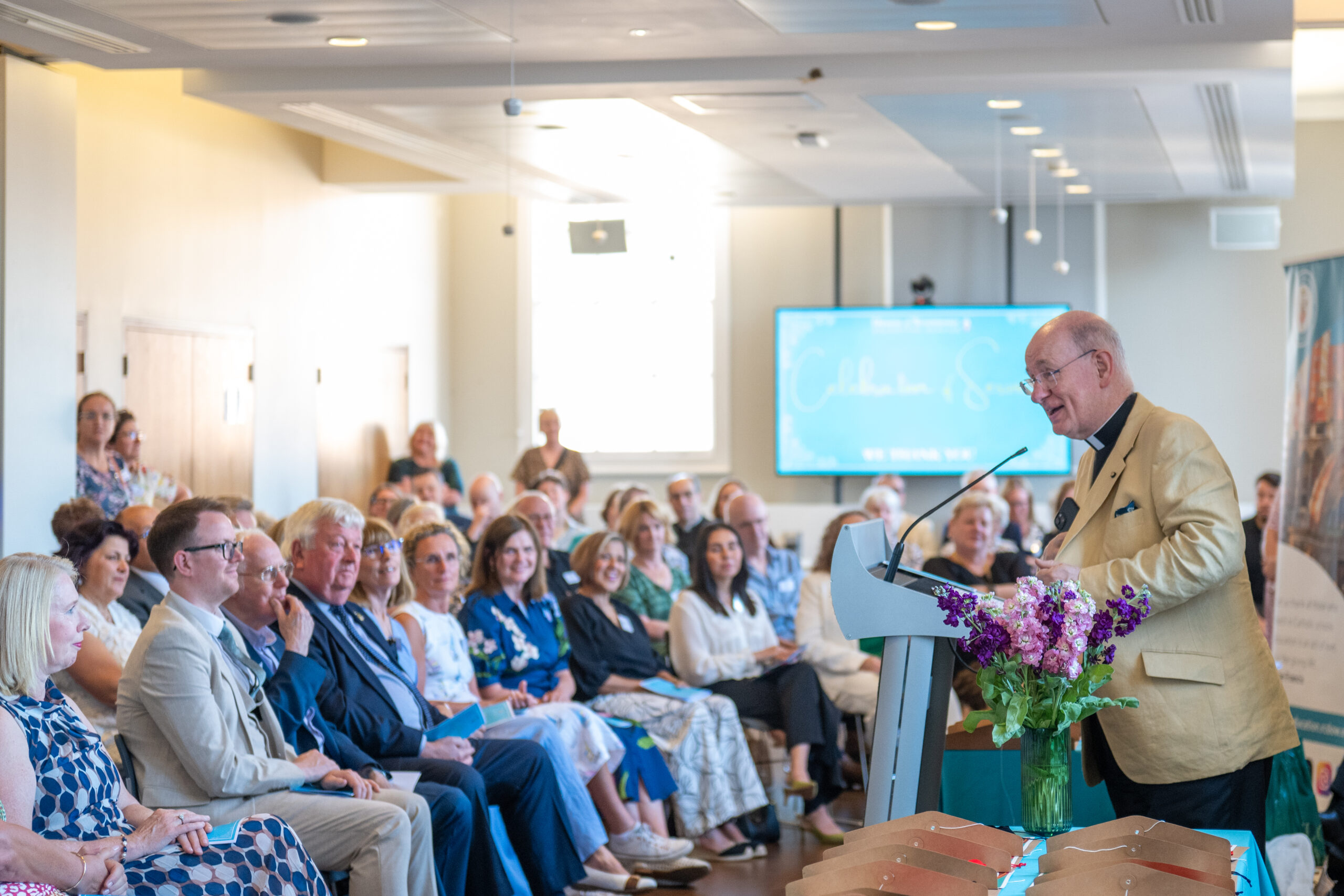


Homily given on the 150th Anniversary of the founding of The Beaumont Union, May 15 2026, at the Beaumont Estate in Old Windsor
150 years is worth celebrating. I know today there will be a complex mix of emotions. How could it be otherwise? Friendships recalled, memories stirred, and a remembrance of those who are no longer with us and who shaped our lives.
The Beaumont Union began as a close brotherhood marked by, among other things, a passion for sport, gatherings, and shared life at the alma mater. The Union was marked also by the world’s rough realism: wars, loss of young lives, and later the closure of the College.
That closure could have ended everything. It could have produced only anger—at what was lost, an intense sense of trust betrayed, and the feeling that the Union had been left holding an empty shell.
In the Word of God given to us in today’s Mass, we see two men facing pressure from every direction: Paul before royal authority in Caesarea, and Peter restored to his mission by the risen Lord.
And in both scenes, the question is the same, even if it is asked differently: Will you continue to love God and neighbour when it costs you something?
The Beaumont’s story resonates with these texts and the question posed.
The Gospel message reminds us that love is proved when it is tested, not when everything is secure. In the life, death and Resurrection of Christ, Jesus proves love by redirecting love’s purposes. Death becomes the seedbed of life.
So, Paul’s love for Christ becomes witness, even under custody and delay.
And Peter’s love for Christ becomes ‘food for others’, even after failure and pain, when Jesus asks Peter, again and again, “Do you love me?”—until love is turned into service.
When the Beaumont Union, rather than shrinking into grief, found a new outlet for love in action, with the beginning of HCPT, the story becomes recognisably Christian: a brotherhood becomes a shepherding mission of care and giving, love redirected and expressed.
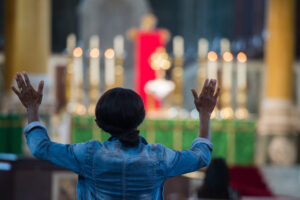
You are no doubt familiar with the phrases “hands on” and “hands in prayer.” It is a common temptation to think they belong to different worlds: one busy and practical, the other quiet and spiritual. They actually belong together. They need each other.
The BU survived shock and loss and found a renewed purpose—answering God’s call to love with charity in truth. And that, dear friends, is what the Gospel and Church ask of every Christian, whatever our background or season of life.
At the heart of Christianity is not simply an emotion, nor even a vague sense of doing good, but the theological virtue by which we love God above all things, and our neighbour as ourselves for the love of God.
Put simply, Christian charity is not whatever we happen to feel like doing. It is love that becomes real in concrete good because it is rooted in Christ, who is Truth: giving to the least of those who are our sisters and brothers.
This reality is not a private sentiment. It shapes all our action. Jesus makes charity the new commandment—“that you love one another as I have loved you”—and this love is meant to go “to the end,” to imitate the way Christ loves.
In your enjoyment of convivial sport and fellowship, you were already expressing a profound good: belonging, loyalty, sacrifice, friendship, and a shared discipline.
The story you tell and cherish is more than nostalgia for old friendships. It’s the account of how a community learned that fellowship needs to become service if it is to remain Christian, to remain alive.
And that is exactly the turning point your story describes: after the College closed—after a loss that could have produced endless resentment, withdrawal, or bitterness—the Union found that its mission would either shrink into grief or grow into charity.
The closure of the school could have made the Union feel pointless. No other Old Boy organisation suffered such a blow, and many understandably felt anger and hurt. Yet your bonds of friendship, shared experience and loyalty to what was good in all you held in common triumphed.
This triumph was not built on the instinct to protect yourself. It was and is built on the logic of the Cross: love perseveres through loss, and it finds a way to keep giving.
A God-given new opportunity came in a fortuitous beginning: in 1956, a young doctor, Michael Strode, took three disadvantaged children to Lourdes, and that moment blossomed into HCPT. And at the very beginning, both Old Boys and the school became involved.
That detail is a sermon in itself. Charity often begins small: sometimes with only a few people, sometimes with a single journey, sometimes with a “yes” that doesn’t look like much at first.
Yet caritas, love in action, is creative and redemptive, poured into our hearts and made present through Christ.
A brotherhood that had once been defined by uniformity of experience—school, sport, gatherings—was redefined by compassion.
The Union did not become irrelevant; it became transformed.
Your history is marked too by another loyalty and striking reality: war and all it asks and takes. Many Old Boys spent part of their lives and died in uniform, in service of others and defence of hard-won freedoms. They demonstrated a willingness to carry burdens for the sake of others.
The fine Gilbert Scott war memorial stands as a precious and poignant memorial to them all. A number of you also served in uniform, and many of you will have experience of the OTC, a shared experience of discipline and obedience to duty.
A Jesuit might ask the question: What are you training for? The story of the Beaumont Union answers that question by pointing to a deeper uniform than any military one: a life willing to give in service to others.
The Church describes the Christian community as one body with many members—each member indispensable, each called to care for the others. That means service is not optional decoration. It is the proper rhythm of a body that wants to live. From fellowship to service.
150 years is worth celebrating. Friends, nothing stands still; we are always moving forward. Will the spotless, flawless name of Beaumont—Nomen Beaumontanum—be remembered? Of course it will, whenever your names are recalled; remembered in the colours of the Beaumont Rugby HCPT region shirt; remembered by those who loved, love, and admire you. Wherever a glass is raised or a prayer is said for you at the war memorial, in a parish church, or in the grotto at Lourdes, you live on—and in the great eternal heart of the God of Jesus Christ, always.
For we are defined by Aeterna non caduca — “The eternal, not the passing.”
As I conclude, your story gives one of the best theological insights: the Union might be “superfluous” to its original beginnings, but others needed them more—so they answered the call from “hands on” to “hands in prayer.”
That phrase matters, because it shows charity is not only activity; it is also intercession, patience, and sacrificial spiritual solidarity.
When you do that, when you blend “hands on” with “hands in prayer,” you become the kind of community Beaumont found after its loss: a brotherhood whose members can say, in effect, “Whatever the origin, we exist for others now.”