

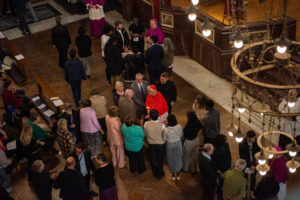
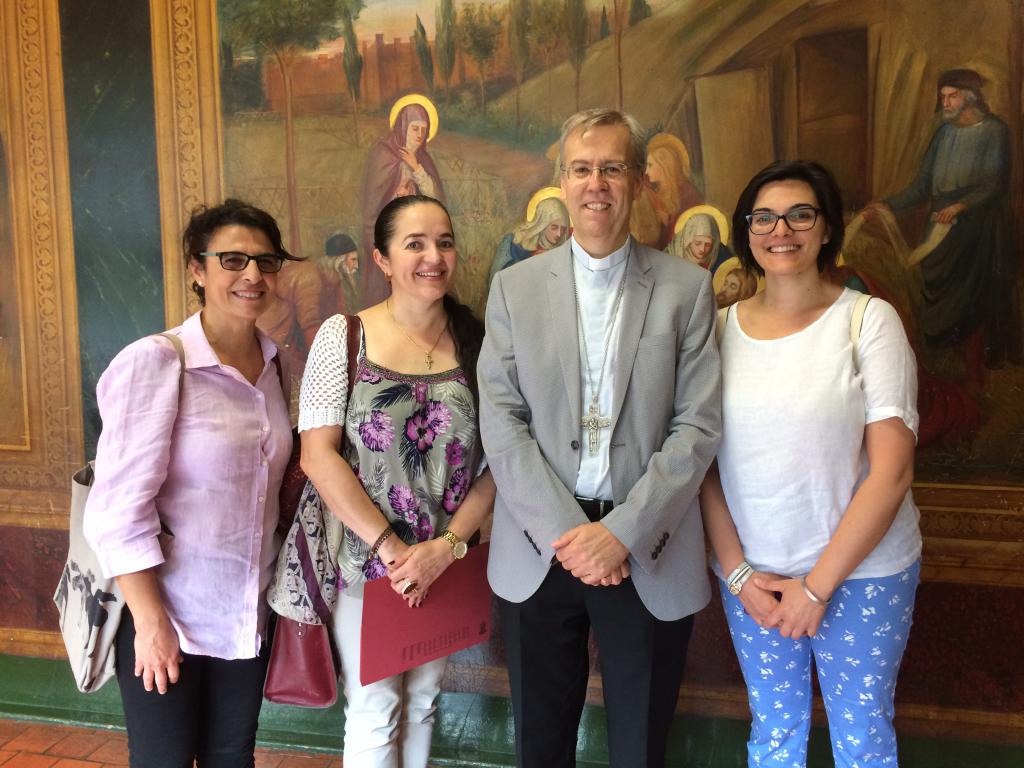
On 8th July, Bishop Nicholas Hudson addressed a group of catechists at St Peter’s Church (the Italian Church) during a day of recollection.
Thank you for accepting this vital ministry of being a catechist in the Church. I hope you experience what many catechists find: that they receive more than they give; that, in catechizing, they find they are catechized; and also that they mature in faith.
It was Pope Paul VI who suggested that the role of a catechist is not so much a ministry as a vocation, a love indeed. ‘What is this love?’ he asked in Evangelii Nuntiandi. ‘It is the love,’ he said, ‘not so much of a teacher as of a father, or rather of a mother’ (EN 79).
As the General Directory for Catechesis affirmed, ‘the task of the catechist is to help a person to encounter God’ (139). It went on to say, ‘the catechist is essentially a mediator. S/he facilitates communication between the people and the mystery of God … as well as with the community’ (156).
I find particularly encouraging the words of Pope St John Paul II to the International Catechetical Congress of 1997. They have an even deeper resonance now than when he first uttered them 20 years ago and said, ‘The catechist in a way interprets the Church to those who are being catechized. The catechist reads and teaches them to read the signs of faith, the most important of which is the Church. At the same time, the catechist must be able to discern and make the most of the spiritual inklings already present in a person's spiritual life, according to the fruitful method of saving dialogue. This is a task which arises again and again: catechesis must be able to grasp the questions arising in the human heart and direct them towards the answers offered by creative and saving Love.’
The last thought with which I shall leave you is what it says in the General Directory for Catechesis, that catechesis is ultimately a mystery.