
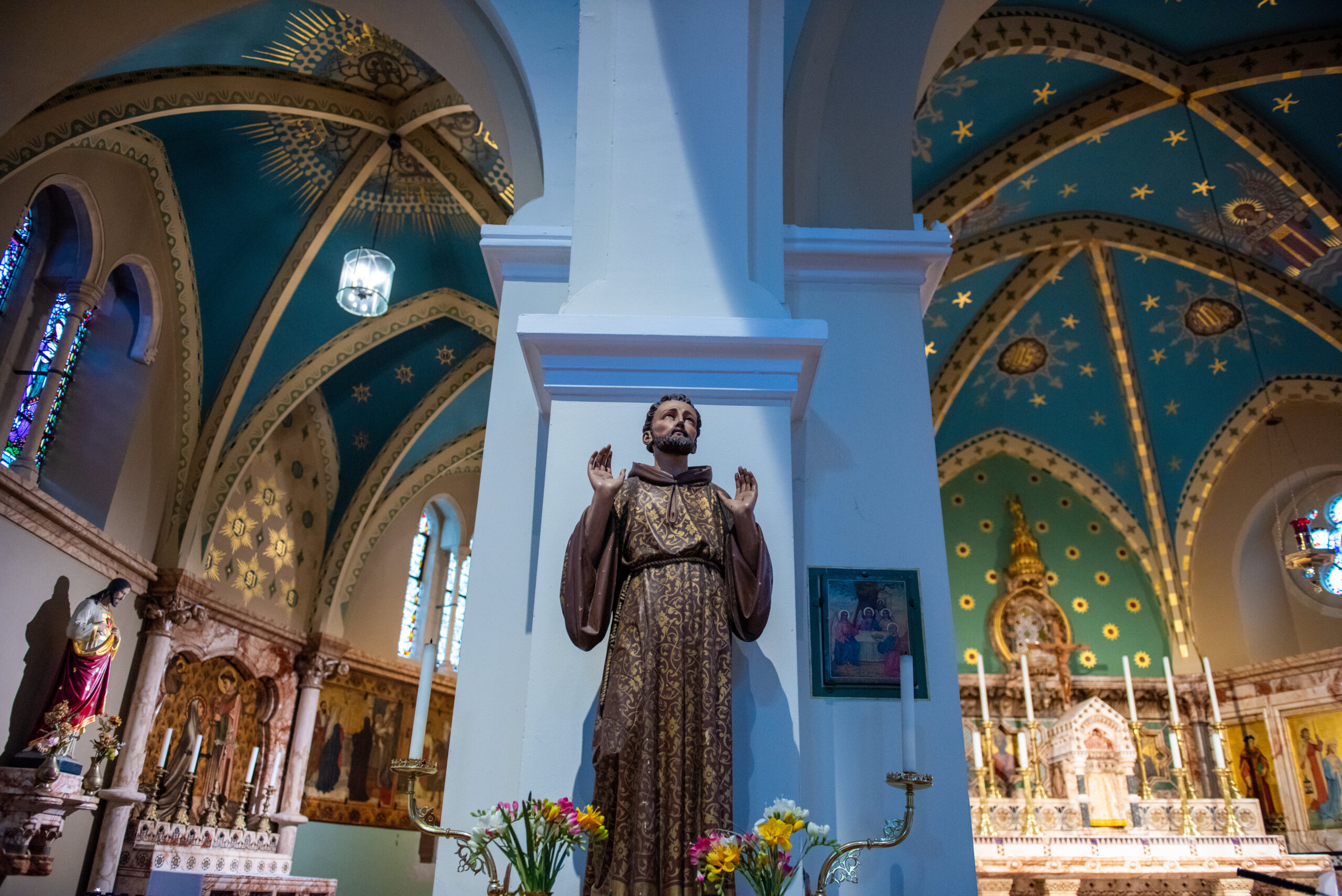
Over the past 800 years, one man has captured the imagination of millions across the world: St Francis of Assisi.
This man of peace, who died 800 years ago in 1226, was celebrated by Pope Francis and has been made a focus of this year by Pope Leo. Designating 2026 as the Year of St Francis (1), Pope Leo has given Franciscans and faithful alike an opportunity to celebrate the life of a man who, in obedience to God’s will in his life, cultivated a life-giving relationship with all of Creation.
At a young age, Francis experienced a radical conversion, abandoning the comfort of his wealthy upbringing and taking the Gospel at its word: “If you would be perfect, go, sell what you possess and give to the poor, and you will have treasure in heaven: and come, follow me” (Matthew 19:21 (RSVCE)).
These words of Jesus are taken from Matthew’s Gospel during a dialogue with the rich young man. The man asks Jesus what he must do to obtain eternal life. Jesus’ response leaves the man sad, because he had great wealth.
Upon responding to the call to renounce earthly wealth and restore his relationship with God, Francis’ relationship to all of Creation was transformed. This decision, taken as a young man, marked the start of the rest of his life.
Many stories about St Francis are taken from an account of his life by St Bonaventure. One beautiful story is that of St Francis preaching to the birds.
In St Bonaventure’s account, he recalls Francis’ dilemma: having turned his life around, embraced a restoration of relationships with all, should he now devote himself entirely to prayer or go out and proclaim the Good News of Christ?
The answer comes from his closest friends, including St Clare of Assisi, who prayerfully discerned that God’s will was for Francis to continue proclaiming the Gospel. And so, where does Francis go? Who does he first encounter?
Francis saw a large flock of birds, a group of all different kinds sitting together. He went right up to them and preached the Word of God to them. He urged them to praise their Creator, who clothed them in feathers and provided them with pure air in which to fly.
This was a significant point in Francis’ newfound faith because, for Francis, a relationship with nature was not an end in itself. Instead, the beauty of Creation gives praise to the beauty of the Creator. In the words of Pope Francis, whose Encyclical Laudato Si’ draws on the life of St Francis, “St Francis, faithful to Scripture, invites us to see nature as a magnificent book in which God speaks to us and grants us a glimpse of his infinite beauty and goodness” (2, §12).
Towards the end of his life, St Francis penned the “Canticle of the Sun”. This prayer is a great hymn of praise to “Brother Sun”, “Sister Moon”, “Brothers Wind and Air” and “Sister Earth, who sustains us with her fruits, coloured flowers, and herbs”. At the evening of his life, Francis came to embrace Sister Death, leaving behind a legacy of peace and renewal, underpinned by trust in God.
In the words of Pope Leo, St Francis recognised that “peace with God, peace among human beings and with creation are inseparable dimensions of a single call to universal reconciliation” (3).
In this Year of St Francis, let us follow this example. May we seek peace with all those who share the world with us, embracing the call to reconciliation and joyfully proclaiming the Gospel by our lives.
References
- Decree of the Apostolic Penitentiary on the occasion of the Eighth Centenary of the death of Saint Francis of Assisi, by which a special Jubilee Year is proclaimed, with associated Plenary Indulgences – 16th January 2026: https://press.vatican.va/content/salastampa/en/bollettino/pubblico/2026/01/16/260116c.html
- Pope Francis – Laudato Si’ – 24th May 2015: https://www.vatican.va/content/francesco/en/encyclicals/documents/papa-francesco_20150524_enciclica-laudato-si.html
- Pope Leo – Letter of the Holy Father Leo XIV to the Ministers General of the Conference of the Franciscan Family on the Occasion of the Opening of the Eighth Centenary of the Death of St Francis of Assisi – 10th January 2026: https://www.vatican.va/content/leo-xiv/en/letters/2026/documents/20260107-lettera-morte-sf.html