
By Barbara Kentish
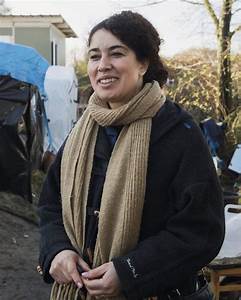
Mariam Guérey (pictured) might be called a ‘human face of human rights’ in Calais, where she has been with Secours Catholique-Caritas France for 15 years. There are many more who deserve a mention, but her story is striking. An exilée now helping others, she left her home in Morocco in the late 1990s to avoid a forced marriage, and had to wait for eight years to obtain her papers for French residence. Naturally she did not see her future consisting of life in a Moroccan enclave, so was horrified when a housing official introduced her to her new council home on an estate settled mostly by people of North African origin with the remark, ‘Look, here are all your cousins: you will be at home here!’
This was not the new independent life she had sought, leaving Morocco, so she has spent her time ever since working for a more integrated society. At Secours Catholique she has been on the streets with the exilés, whether Iraqi, Syrian or Afghan, fighting for their rights. Driving along in Calais this August with her on my first maraude (soup run), the Eritrean pop music blaring, and her friendly waves bringing a smile to the faces of all the migrants we passed, one couldn’t help but believe that a better, more integrated, world existed!
On her own admission, she gets a huge ‘buzz’ out of solving people’s problems. I was highly amused to watch her address the dilemmas of two young men in her office at one and the same time. One needed money to pay a fine, while the other wanted help with immigration paperwork. She offered help to the latter if he would lend money to the former! Both went away satisfied, if mystified, as to how it had worked out.
She believes in human beings, and not in any one religion; yet with her, I felt a good deal of what Pope Francis calls ‘Joy of the Gospel’ in action. She loves problem-solving, but most of all, she wants people to value and enjoy the richness of one another’s difference. Her latest initiative at Secours Catholique is the ‘Project of Brotherly Love’, which creates sponsorship between local Calaisians and migrants with papers on a one-to-one basis. The project’s strapline is ‘I am rich in my friends’.
Her time at Secours Catholique falls into three stages, she feels: the invisible, including the post-Sangatte time; the visible, that is, the Jungle time; and once more, the invisible, when people have forgotten the migrants of Calais. Just as the tide comes in and out of Calais’s harbour, so migrants will come and go in Calais, Mariam observed. The human rights witness must go on, on both sides of the border. For as a recent Catholic Worker banner proclaimed, ‘God knows no borders’.
(Justice and Peace has raised a further £4,000 for the Catholic Worker House in Calais since Easter this year. It helps to offer hospitality to young migrants, mainly at this moment from Eritrea).