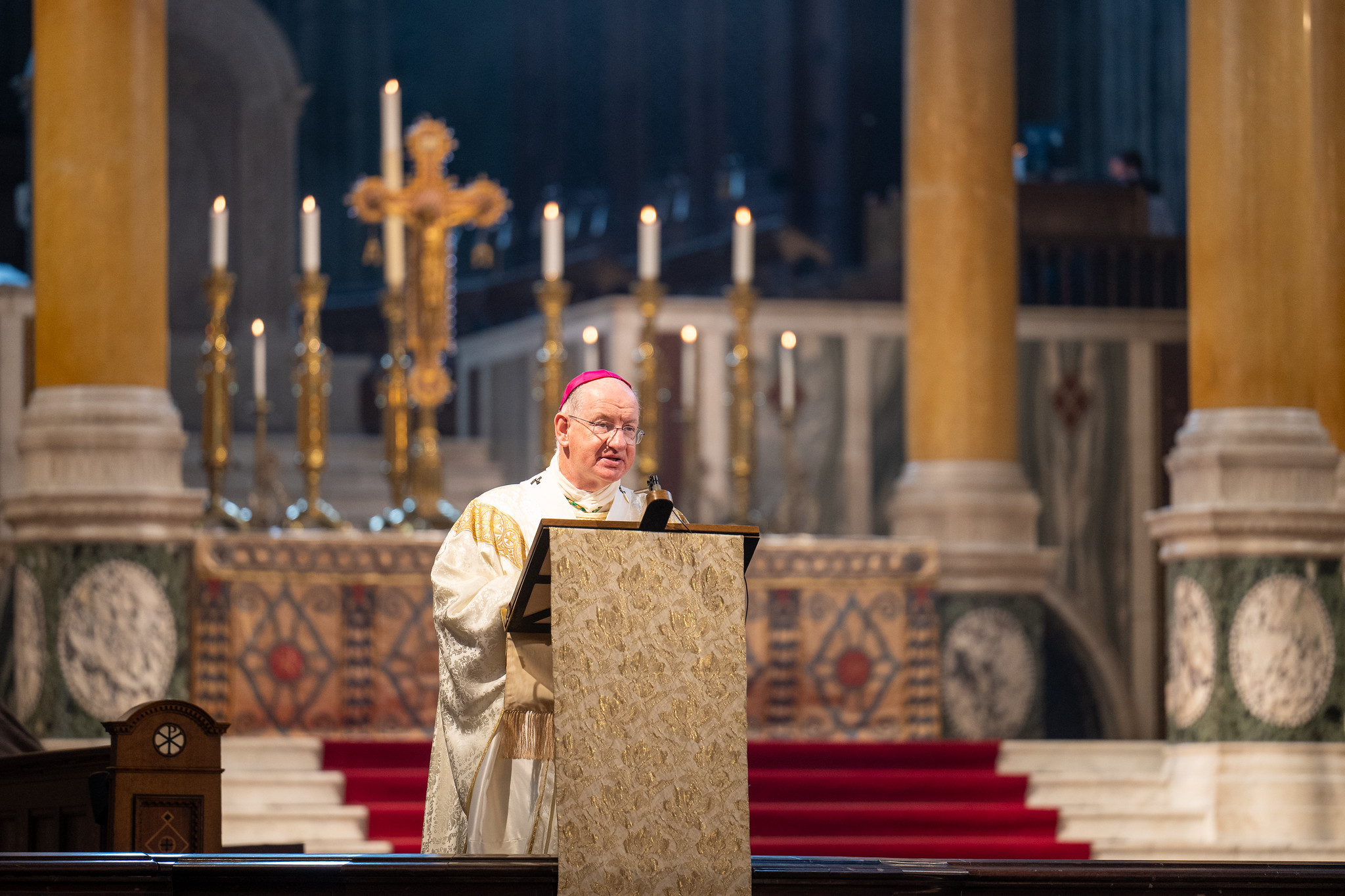

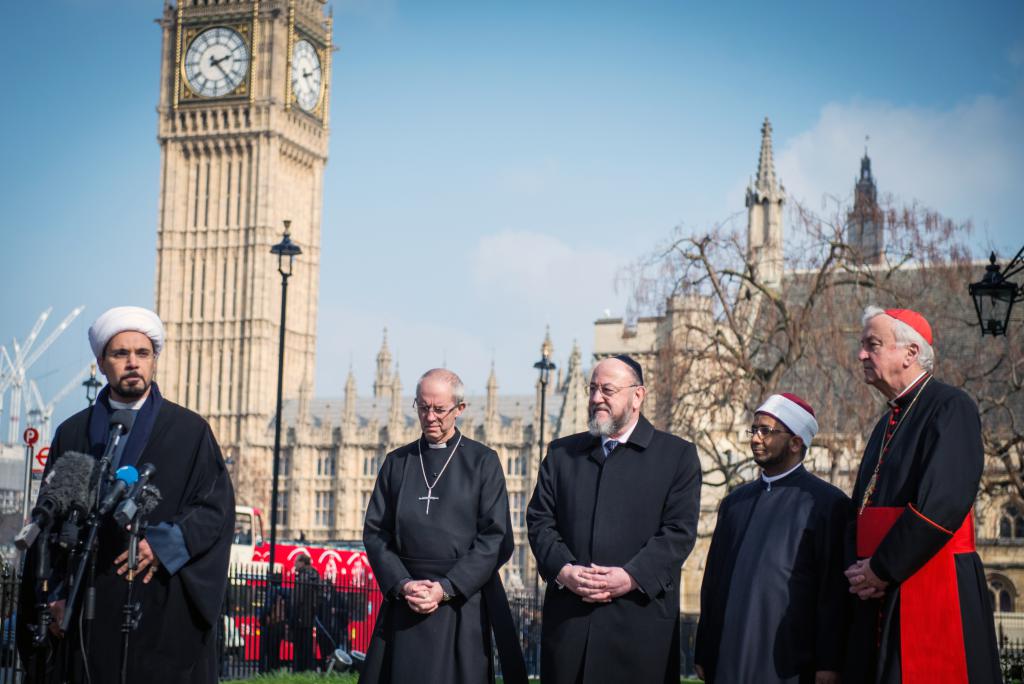
During his first visit as patron to St Ethelburga’s Centre for Peace and Reconciliation on 10th May, Cardinal Vincent gave an address reflecting on how those ‘who are rooted in religious faith can contribute to the revitalisation of community through the reinvigoration of hope’.
Speaking of his experience of the three cities of Liverpool, Birmingham and London, which have all faced conflict and violence he said: ‘It is precisely my experience of the resilient goodness of people in those challenging circumstances that encourages me to face the future with a true and certain hope.’
‘Central to that hope is the importance, and presence, of heart-to-heart dialogue between peoples of great difference,’ he added.
Among the examples of this dialogue, he spoke of the support from faith leaders reaching out to other faith communities in times of fear and uncertainty, the efforts at St Mary’s University to be ‘an open home to debates about the appropriate place of faith in our society’, the work of Blueprint for Better Business that ‘is prompting many in business to look again at their underlying purpose’, and the commitment shown by faith leaders to seek understanding and cooperation.
The Cardinal added: ‘In describing all these efforts I am not upholding a bland “tolerance” that actually wants to privatise all that people hold dear, especially their faith, that reduces friendship to the lowest common denominator and pretends that something constructive is taking place.
‘I mean, rather, robust and reciprocal conversations, and the recognition of shared and urgent concerns. These include the questions of violence and religious faith, and violence and secular ideologies. They include pressing social needs such as low wages, the lack of affordable housing or living rents, the impact of war and the mass migration of people, an affirmation of the spiritual dimension of human flourishing and the centrality of charity.
‘This is the “meaningful dialogue between peoples” that we must seek. And because I see in many quarters a rising commitment to such committed and engaged dialogue, I see reason for hope and confidence for our shared future.’
He also recognised parishes and schools as places of ‘meetings of people from every walk of life’, explaining, ‘often, within a parish, 40 or more different languages are spoken, and people meet each other, share customs and tastes, bound together, of course, by a common Catholic faith. Such parishes are a true reflection of the wonderful diversity of this capital city and places where integration is constantly being built.
‘Our schools teach English to the parents of immigrant children; our liturgies include the traditions of other cultures; our social outreach, which does not look at faith belonging, crosses every boundary.’
He added: ‘It is human life gathered, consciously or otherwise, together, and in that I find cause for hope.’
Looking at the basis that undergirds this ‘meaningful dialogue between peoples, and the aspiration to sustain concrete collaborations between places,’ the Cardinal said it was ‘perseverance, a gift of the Holy Spirit, or in a more contemporary word: resilience’.
‘Such resilience depends upon more than determination and willpower. It draws on our sense of divine destiny and purpose, a fundamental conviction that human flourishing is about more than self-actualisation, individual aggrandisement, and that it is diminished when community and solidarity are denuded,’ he added.
‘We can be renewed in the sure and certain hope that within all that is best in the human spirit, especially when it bears joint witness with the Spirit of God, there is the capacity to persevere with true resilience in the work we do in the service of all people in this city and in our world today’.
The full address can be found here.