
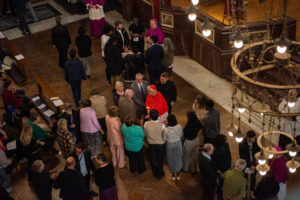
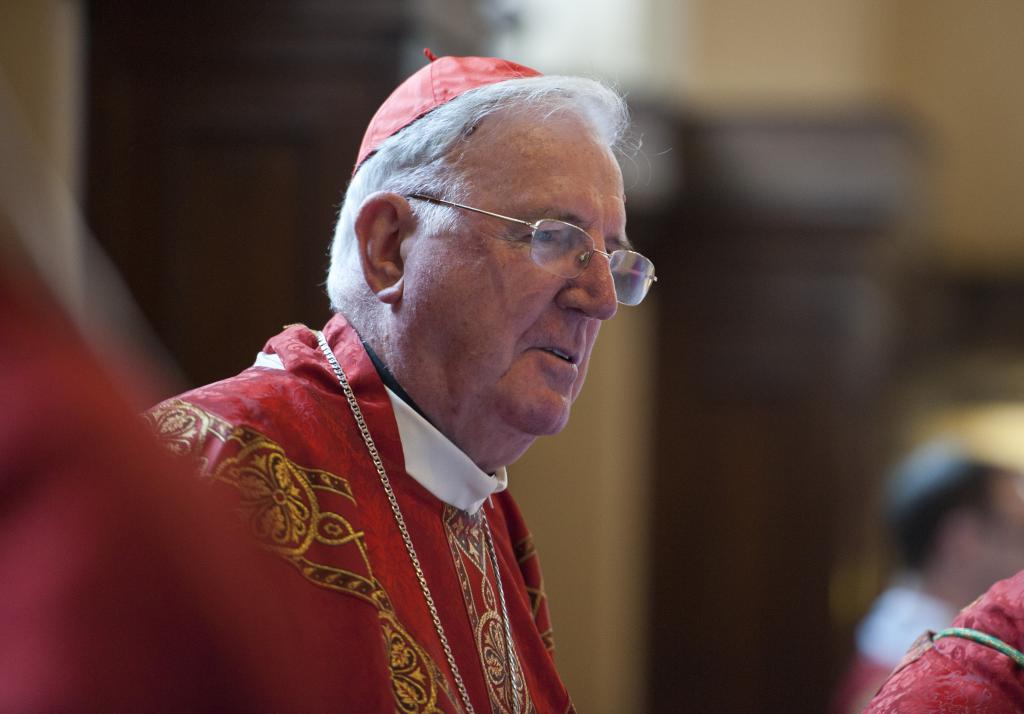
On 1st September 2018, a memorial Mass was celebrated at Westminster Cathedral to commemorate the first anniversary of the death of Cardinal Cormac Murphy-O’Connor, tenth Archbishop of Westminster.
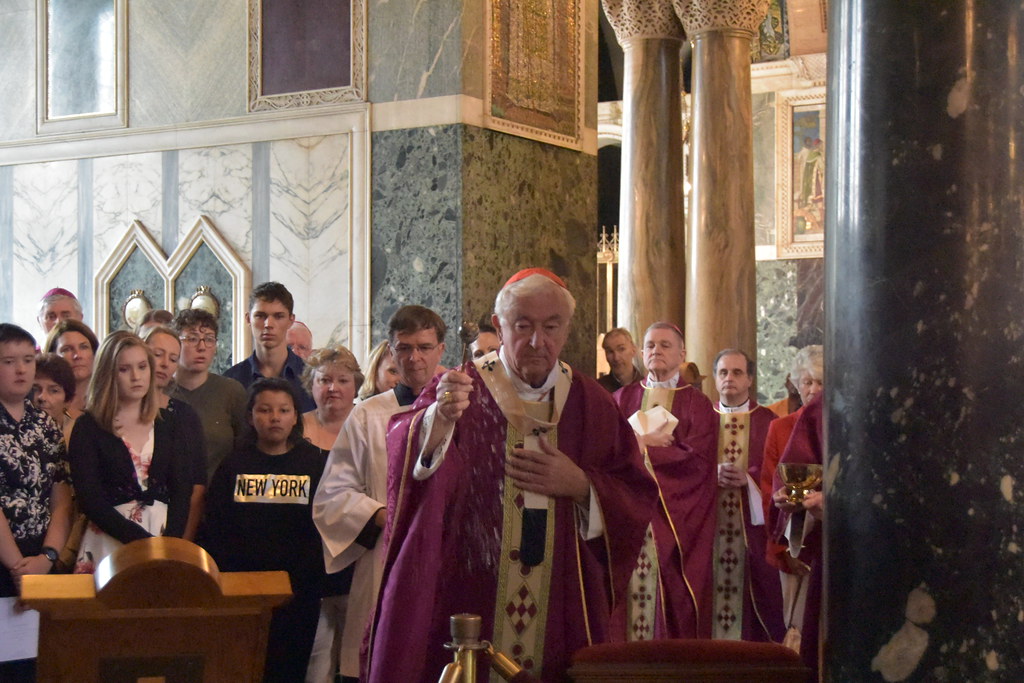
Cardinal Vincent Nichols was the principal celebrant. Concelebrants included the Apostolic Nuncio Archbishop Edward Joseph Adams, Archbishop of Birmingham Bernard Longley, Auxiliary Bishop of Westminster Nicholas Hudson and Bishop Emeritus of Lancaster Michael Campbell OSA, along with a number of priests from around the diocese. Present among the congregation were members of Cardinal Cormac’s family.
Preaching the homily, Mgr Martin Hayes, who was the third and last of Cardinal Cormac’s Private Secretaries during his time as Archbishop of Westminster, explained that remembering his life in the context of the Mass is right, as with Cardinal Cormac, it was always ‘the Mass that matters’.
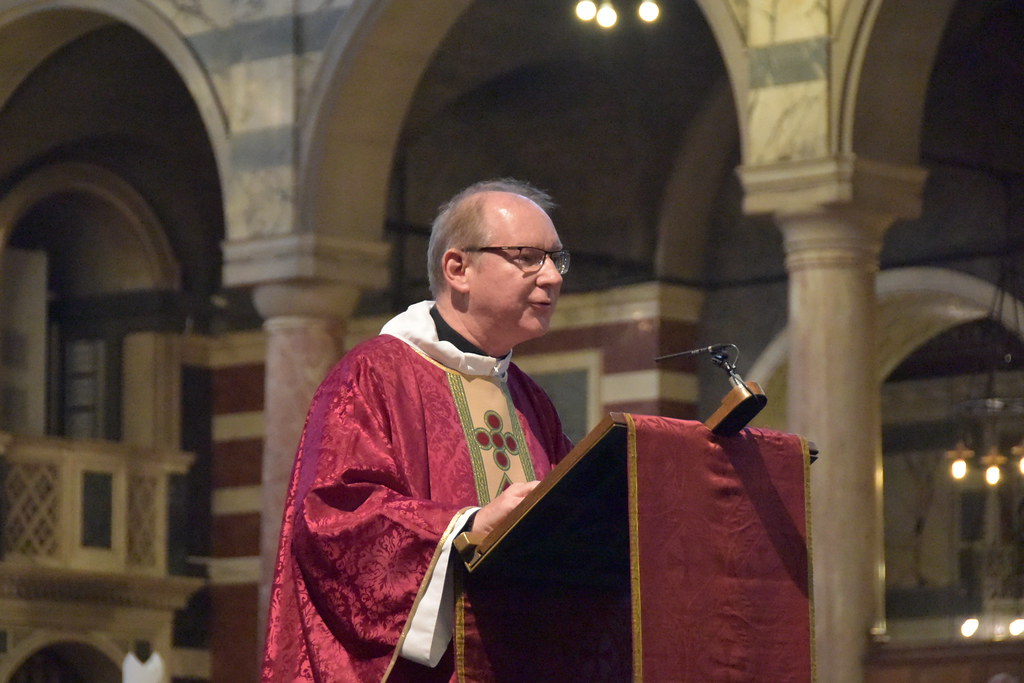
‘Cardinal Cormac had a love for God’s word as given in the Bible’ and for him, ‘the word leads to the Eucharist, and that is the path to maturity in the Christian life and it is the pattern of the celebration of every Mass.’
Describing Cardinal Cormac as an ‘evangelist,’ Mgr Martin explained that ‘he encouraged people to read and reflect on God’s word, especially in small groups, allowing God to speak to their hearts and enabling the sharing of God’s word and message among the participants’.
Cardinal Cormac was ‘a man, priest and Bishop committed to living out his faith with joy and hope, and to leading the people of God entrusted to his care, through times of opportunity and challenge,’ said Mgr Martin. He ‘maintained his belief and trust in the Lord, and his belief in the essential goodness of people, despite our faults and failings.’
‘Cardinal Cormac could bring light and laughter to any but the most distressing of situations,’ he added.
After Mass, Cardinal Vincent, along with the clergy and members of Cardinal Cormac’s family, prayed at the late Cardinal’s tomb.
The full text of Mgr Martin Hayes’ homily:
Looking around the cathedral, it is good to see so many of you here at this Mass. I echo Cardinal Vincent’s words of welcome: to the Bishops, priests and deacons, Religious Brothers and Sisters, parishioners of and visitors to the cathedral and members of the family and friends of the late Cardinal Cormac Murphy-O’Connor, tenth Archbishop of Westminster, who, before coming to Westminster, had served as the third Bishop of Arundel and Brighton for twenty-three years and before that as a priest of the Diocese of Portsmouth since his ordination in October 1956.
I first met Cardinal Cormac when I was a 21-year-old student of architecture in Brighton and he was the newly-appointed Bishop of Arundel and Brighton on a visit to Howard House, the student chaplaincy in the centre of town. His visit was a happy and memorable occasion. Our paths crossed occasionally over the early years and more frequently as time went on, especially after his arrival in Westminster.
During my time as his third, and last, Private Secretary in Westminster, I recall a story he told, a story that may be familiar to others here this afternoon. The Bishop was making a parish visitation and he was disappointed that not many people had turned out. Somewhat deflated, he turned to the Parish Priest and said ‘Didn’t you tell them I was coming?’ The Parish Priest answered, ‘No, My Lord, but the news must have leaked out!’ Cardinal Cormac was a great man for stories!
‘Do this in memory of me’, the words of Jesus at the Last Supper in the evening before he laid down his life out of love for all God’s people of every time and place. This afternoon we are remembering Cardinal Cormac Murphy-O’Connor who, in the afternoon of Friday 1 September last year surrendered his soul to the loving mercy of the God he knew, loved and served. Our remembering, and our treasuring, of his life is in the context of Holy Mass. And rightly so. For Cardinal Cormac it was always ‘the Mass that matters’. Whether in this fine cathedral, or at the open-air Cathedral of the Trees in Lourdes, or in a parish church or convent chapel, or in a school classroom or playground, and whether in English or Latin or a mixture of both, it was always ‘it’s the Mass that matters’.
For this particular Mass, commemorating the first anniversary of the death of Cardinal Cormac, the scripture readings are those given for the Mass of the day, Saturday of Week 21 of Ordinary Time. He often said, when preparing Mass for any particular celebration, let’s start with the readings as given: ‘it’s the Mass that matters’.
Cardinal Cormac had a love for God’s word as given in the Bible, ‘the word of life’ as heard in today’s Gospel Acclamation. He was an evangelist, and he encouraged people to read and reflect on God’s word, especially in small groups, allowing God to speak to their hearts and enabling the sharing of God’s word and message among the participants. For Cardinal Cormac the word leads to the Eucharist, and that is the path to maturity in the Christian life and it is the pattern of the celebration of every Mass. We are doing this, here and now, in remembrance of Jesus and in fidelity to what he has asked us to do. Cardinal Cormac would be pleased. And because we believe that death is not the end of life but, through the power of God’s love, the beginning of a new way of living life in its beatific fullness, we can say that Cardinal Cormac is pleased.
On this date last year, following the peaceful death of Cardinal Cormac, on Friday afternoon surrounded by a group of family and friends, tributes immediately followed. Cardinal Cormac was praised as a man, priest and Bishop of the Church of the Second Vatican Council, committed to ecumenism and to the growth in faith of the people of God. At the funeral rites, first in Chiswick where he had been living in retirement since 2009 and then here, in the cathedral, homilies and addresses were given that recounted his life and achievements, his love of the Church and his commitment to his faith, family and friends. These have been documented and deserve to be re-read. He knew that many people would have plenty to say about him, but he also wanted to ensure that he would be able to say what he wanted to be heard.
He wrote a book of his memoirs, ‘An English Spring’, published by Bloomsbury in 2015. It is the very human account of a man, priest and Bishop committed to living out his faith with joy and hope, and to leading the people of God entrusted to his care, through times of opportunity and challenge, ‘the best of times and the worst of times’, while retaining and sharing his faith, hope and love. Indeed, he sometimes referred to the opening lines of Charles Dickens’ ‘A Tale of Two Cities’ as a kind of commentary on his ministry. ‘It was the best of times, it was the worst of times, it was the age of wisdom, it was the age of foolishness, it was the epoch of belief, it was the epoch of incredulity, it was the season of Light, it was the season of Darkness, it was the spring of hope, it was the winter of despair, we had everything before us, we had nothing before us, we were all going direct to Heaven, we were all going direct the other way.’ But Cardinal Cormac maintained his belief and trust in the Lord, and his belief in the essential goodness of people, despite our faults and failings.
While working and living with him during his last year in office as Archbishop of Westminster, he generously and trustfully included me and others in all aspects of his life and work. He had a way of seeing the potential in others and helping their gifts to be brought out. As we heard in the first reading, from the First Letter to the Corinthians, ‘Take yourselves, brothers, at the time when you were called: how many of you were wise in the ordinary sense of the word, how many were influential…? No, it was to shame the wise that God chose what is foolish by human reckoning… those whom the world thinks common and contemptible are the ones that God has chosen – those who are nothing at all to show up those who are everything. The human race has nothing to boast about to God, but you, God has made members of Christ Jesus and by God’s doing he has become our wisdom, and our virtue, and our holiness, and our freedom. As scripture says: if anyone wants to boast, let them boast about the Lord’.
In those of us with limited talents, Cardinal Cormac saw and nurtured our potential: potential for greater service of the Lord and the Church and God’s people. ‘For to everyone who has will be given more, and he will have more than enough’, ‘Happy the people the Lord has chosen as his own’: happy are we that Cardinal Cormac chose us to work with him, in the service of the Lord and the Church.
Cardinal Cormac put his own gifts at the service of the Lord and his Church, for over sixty years as a priest and Bishop, and we can say, with St Matthew, ‘Well done, good and faithful servant’. Today’s scripture readings are so apposite for this Memorial Mass.
In his last year in office Cardinal Cormac became increasingly aware that he could be slightly forgetful, and so he asked me to sit in on most of the meetings he had with visitors to Archbishop’s House. He did not mind being prompted when, as a meeting was drawing to a close, some matter that had been overlooked still needed to be addressed; a quiet word in his ear was appreciated.
He retained his spontaneity. It was brought to his notice that a priest of the diocese was becoming tired and strained due the demands of his particular parish, and also due to his particular way of working. And so Cardinal Cormac phoned him, asked how he was and immediately suggested the idea of a sabbatical. The phone was on speaker, and the Cardinal and I heard the angry response, ‘Are you trying to get rid of me?’ The conversation was difficult, and short. When the call ended the Cardinal looked at me and said ‘That didn’t go well!’. Don’t worry I said, I will call the priest, and have a general conversation about sabbaticals and say that the Cardinal is thinking of you and wouldn’t want you to feel overlooked. ‘Good idea’, he said.
When Her Majesty the Queen came to lunch at Archbishop’s House, having accepted the Cardinal’s invitation to come for a personal and informal visit, the Cardinal was going to let Her Majesty know that, later in the week, news of his retirement, and of his successor, would be announced. At the end of a very happy and memorable afternoon, I asked the Cardinal how the Queen reacted to the news of his forthcoming retirement. He put his hand to his cheek and said, ‘I knew there was something I meant to tell her!’ He then touched his nose with his forefinger, as he often did when having a profound thought, and a phone call to the Palace swiftly followed.
Cardinal Cormac was the first Archbishop of Westminster to retire while in office, and it was my privilege to drive him from Archbishop’s House to his new home in Chiswick, and to see him regularly since then, and until and during his final illness, and to be with him when the Lord called him home to Heaven after he had said to the small group at his bedside ‘Start the Rosary’, his last words.
Cardinal Cormac could bring light and laughter to any but the most distressing of situations. But he was an essentially shy man, until you got to know him. He was always grateful for the help and support given to him. He welcomed me to live and work with him at Archbishop’s House. He, like his successor, ensured that the rather forbidding Archbishop’s House was indeed a home. I, like so many who are here today, and those who cannot be here today, have made a home in our hearts for Cardinal Cormac. We loved him and we miss him.
May his soul, and the souls of all the faithful departed, through the mercy of God. rest in peace.
Amen.