
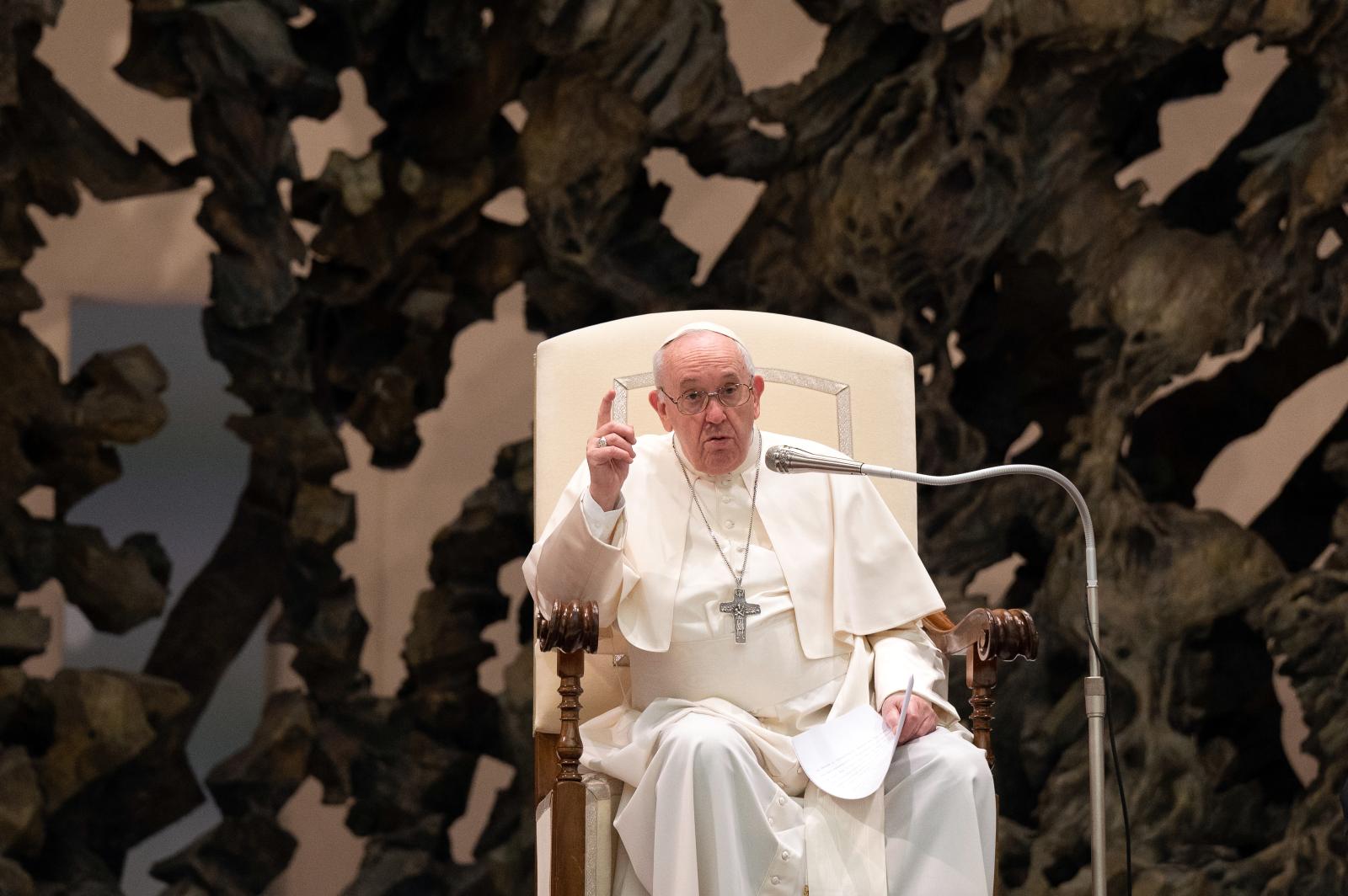
Pope Francis has released his Apostolic Exhortation Laudate Deum, ‘Praise God’, to ‘clarify and complete’ what he started in 2015 with his Encyclical Letter Laudato si’ on how we care for our common home.
It has been released at the end of the Season of Creation on the Feast of St Francis of Assisi, 4th October 2023.
Welcoming the Apostolic Exhortation, Cardinal Vincent Nichols says it ‘ is the Pope's heartfelt appeal to all people of good will, to communities, business, governments and international bodies that each play its part in facing and responding to the challenges of climate change. He asks each of us to contribute by efforts “to reduce pollution and waste, to consume with prudence” and thereby help “to create a new culture”.
‘Faith in God as creator and giver of all good gifts is foundational. The Pope's final words are: “For when human beings claim to take God's place they become their own worst enemies”.'
He commends this Exhortation to everyone’s ‘attention, study and action’.
Lead Bishop for Environmental Issues for the Bishops’ Conference, Bishop John Arnold, praises the Pope’s intervention as ‘timely’ and ‘vital’, saying that Pope Francis ‘once again implores the international community to alter the path of destruction down which we are heading.
‘He reminds us that we should praise God for all his creatures and that our care for our common home is intimately connected with our care for each other.
‘As Pope Francis explains, the decisions we make can have grave consequences, not only for those who are still living, but the generations to follow. We have a duty to take action to look after our planet. “What is being asked of us is nothing other than a certain responsibility for the legacy we will leave behind, once we pass from this world” (LD18).’
In Laudate Deum, the Pope describes climate change leading to drought, extreme weather and global high temperatures as a ‘silent disease that affects everyone’. The Exhortation frequently defines the climate crisis as a ‘global societal issue’ where the impact and consequences are often felt by the world’s poorest people.
Laudate Deum argues that humans are a part of nature, but that we are currently abusing this position, exploiting natural resources and minerals.
Pope Francis writes: ‘Humans must be recognised as part of nature.’ He adds: ‘Let us stop thinking, then, of human beings as autonomous, omnipotent and limitless, and begin to think of ourselves differently, in a humbler but more fruitful way.’
Bishop Arnold echoes these thoughts, arguing that the climate crisis gives humanity a good opportunity to consider our relationship with the rest of creation: ‘Clearly, the way we are currently living our lives is unsustainable. We need urgent political action, on a global scale, to address this crisis before it’s too late. But it’s also right that we ask ourselves certain questions.
‘What is our relationship to God’s creation? Is it a resource for us to make profits from, or a precious gift that we are to protect? Are we stewards of the earth, or exploiters?’
Pope Francis also focuses on international cooperation, calling for a new global framework to establish effective rules to safeguard the environment and promote human flourishing. He addresses the lack of progress at the COP international climate conferences and looks ahead to COP28 in Dubai. He urges delegates to ‘move beyond the mentality of appearing to be concerned’ and to have the ‘courage needed to produce substantial changes’, for ‘we barely have time to prevent even more damage.’
Bishop Arnold also laments the lack of progress since the release of Laudato si’ in 2015: ‘The unfortunate thing is that eight years on, several COP meetings later, we really have not been achieving the targets that those meetings have agreed, and the damage is not being reduced. In fact, in some ways, it’s increasing.’
The Pope does recognise that ‘every little bit helps’ and suggests that efforts by households to reduce pollution and waste, and to consume responsibly, has created a ‘new culture’ and is transformative: ‘Let us realise, then, that even though this does not immediately produce a notable effect from the quantitative standpoint, we are helping to bring about large processes of transformation rising from deep within society.’
Bishop John Arnold agrees and says we can go further: ‘There’s certainly more we can be doing. The first point of focus is education. Parishes, schools, and Catholic organisations are, on the whole, committed to being good custodians but we need a more joined-up effort to make sure that we are doing our best to repair the damage we’ve done.
‘We’ve got to press ahead and make sure that we are a voice, a voice to our democratic nation that says we must change our policies and our life as a nation.’
Photo: Mazur/CBCEW.org.uk