

By Fr Nicholas Schofield, Diocesan Archivist
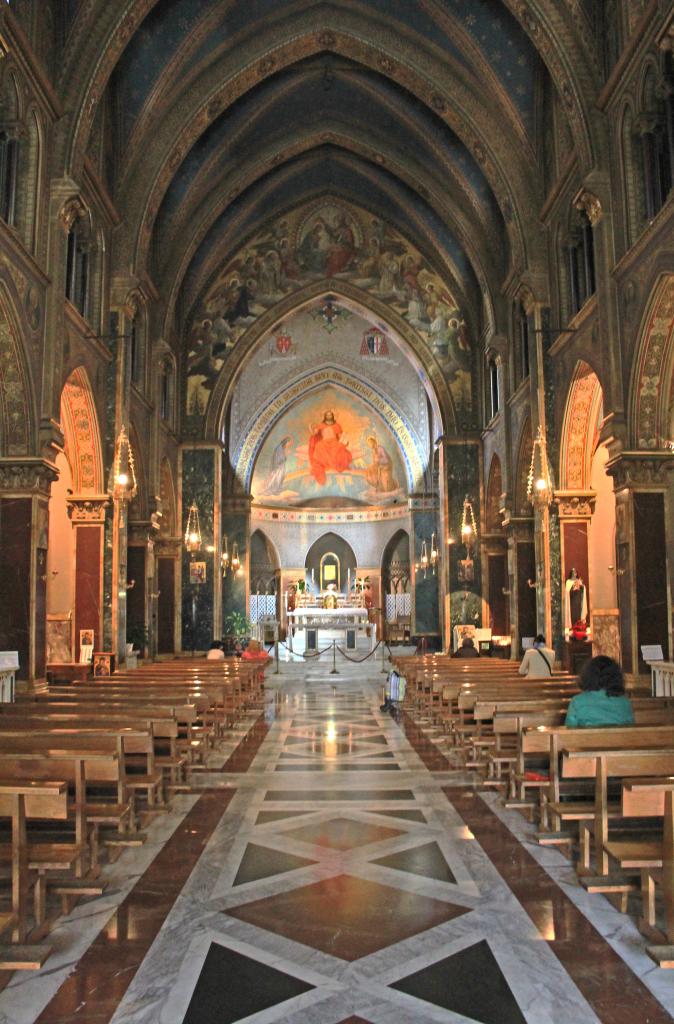
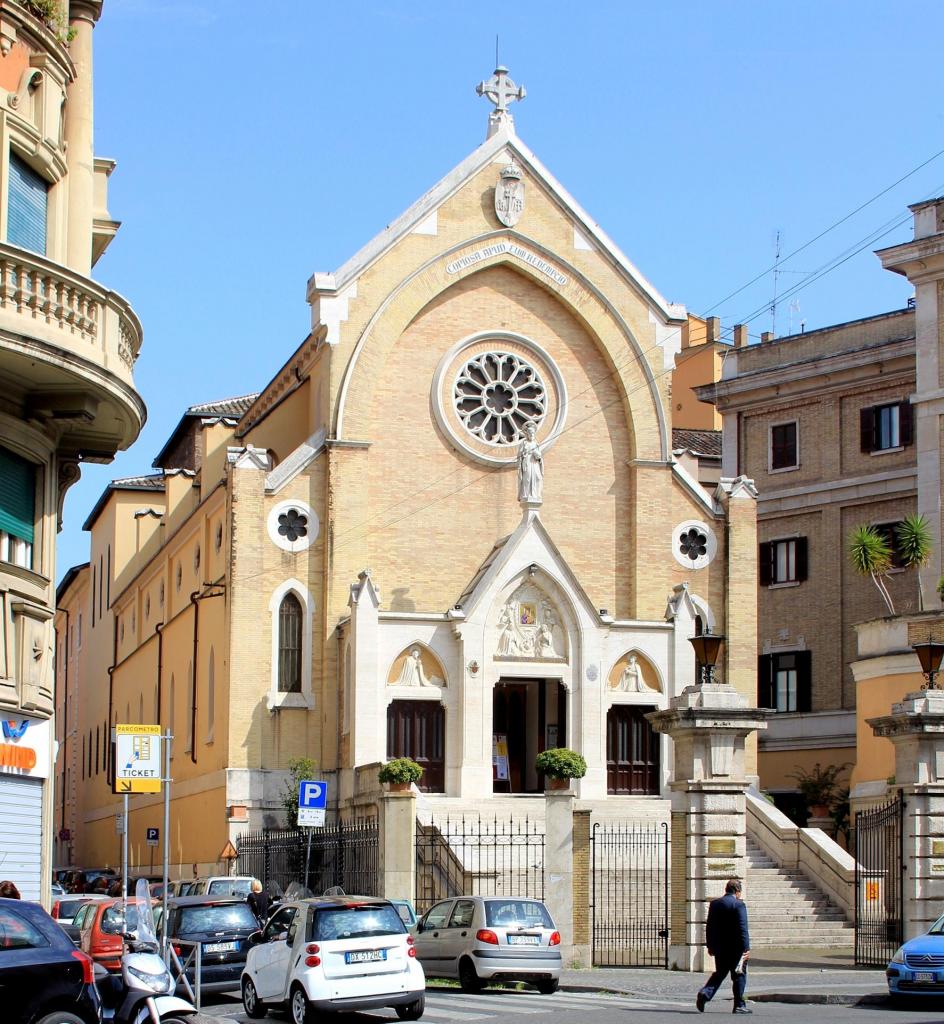
The Roman church assigned to Cardinal Nichols, Santissimo Redentore e Sant’Alfonso in Via Merulana, is not one of the ancient basilicas to which pilgrims flock in their thousands. It is slightly off the beaten track, not far from Termini station. On closer examination, however, it is a fascinating place with a surprisingly little known story full of British connections. It was actually built by one of the first Oxford converts and houses a famous image of Our Lady, one which most readers will recognise.
The celebrated image is that of Our Lady of Perpetual Succour (or Perpetual Help), reproduced widely and the focus in many places of a popular Novena. In the picture, the Christ Child holds His Mother’s hand as He gazes at angels holding the instruments of His future Passion. Mary, meanwhile, looks down at Him with an expression of deep compassion and love. This beautiful icon was first venerated in Crete, where it probably originated, but in the 1490s was obtained by an Italian merchant who transported it to Rome. It was kept in his house until he became seriously ill and, on his deathbed, asked that it be venerated by the faithful. On 27 March 1499 the icon was taken in procession to the nearby church of San Matteo on the Via Merulana. During the procession, a paralytic was cured. This brought the image much fame and over the centuries numerous favours were attributed to Our Lady of Perpetual Help. Among the illustrious devotees who prayed before the image was James III, the Stuart claimant to the British Throne, who lived for many years in Rome.
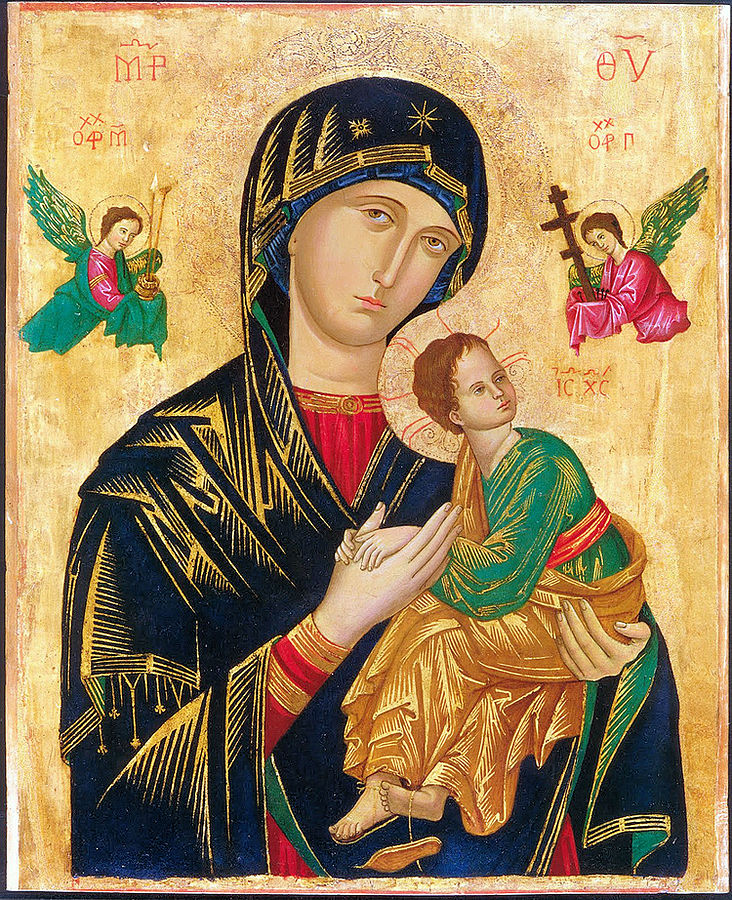
San Matteo was destroyed during the French occupation of Rome. Fortunately the wonder-working image was saved and hung in several churches. However, it was largely forgotten until the Redemptorists moved to a property near the original site of San Matteo in 1853. Permission was granted to bring it to their new church of Sant’Alfonso in 1866. As in 1499, miracles were reported as the image was brought to the church, including a young girl who regained use of a paralysed leg. Soon afterwards the image was solemnly crowned by the Vatican Chapter and the devotion was rekindled and spread across the world by the Redemptorists.
Sant’Alfonso claims to be the last church to have been built in the Eternal City before the fall of the Papal States. Like Cardinal Cormac’s titulus, it is in the gothic style and was actually designed by an Englishman, George Wigley, who was also one of the pioneering members of the Society of St Vincent de Paul and helped bring it to Great Britain.
Sant’Alfonso was built at the expense of one of the early Oxford converts, the Redemptorist Fr Edward Douglas (1819-98). Though little known today, he is a most intriguing figure. Descended from the Earls of Douglas and Mar and related to the Marquess of Queensberry, he was educated at Eton and Christ Church, Oxford. At university he was influenced by Newman’s sermons and he was received into the Church during a visit to Rome in 1842.
After ordination in 1848, he joined the Redemptorists and worked for a while in Ireland and London (where he partly paid for the erection of St Mary’s, Clapham). In 1853 he was called to Rome. Here, once again using his family fortune, he purchased the Villa Caserta on the Via Merulana, to serve as the General House, and built the adjoining church of Sant’ Alfonso. It reminds us that the converts of the nineteenth century brought not only spiritual but sizeable financial benefits, without which the ‘Second Spring’ would have been impossible.
Fr Douglas remained at Sant’Alfonso as Rector for forty years. He also held important posts within the Redemptorists – including (on three occasions) Roman Provincial – and seems to have been well-known among the British community in Rome, with an extensive network of friends and contacts. He made many converts, included David Hunter-Blair (the writer and later Abbot of Fort Augustus), and after his death there was even talk of a cause for his beatification.
Cardinal Nichols’ titular church may not at present be very well known but, with its British origins and its world-famous Marian shrine, it is sure to become a much loved destination for our pilgrims – a little piece of Westminster in Rome.