
The Coronation of King Charles III and Queen Camilla in Westminster Abbey on Saturday 6th May is an historic occasion for the nation, and also for the Catholic community. For the first time in over 400 years, a Catholic Archbishop will take part in a Coronation in this country. Cardinal Vincent Nichols will not only be present, but will also offer a blessing during the service.
The Holy See's Secretary of State, Cardinal Pietro Parolin, will represent Pope Francis with the newly-appointed Apostolic Nuncio to Great Britain, Archbishop Miguel Maury Buendía.
The Catholic Archbishop of Cardiff, Mark O’Toole will also attend the Coronation, as will Bishop Hugh Gilbert of Aberdeen, Scotland and the Archbishop of Armagh and Primate of All Ireland, Eamon Martin.
Seventy years ago, it would not have been permitted for any Catholic to enter a Protestant church, let alone to take part in a Coronation service.
This significant step is the fruit of decades of ecumenical relations. As the Cardinal explains: ‘It’s symbolic of the whole ceremony because it respects our history, it builds on our history, and it complements the history, both in this way, and with the presence and greeting of the faith leaders from the other major religions now present in this country.’
For many centuries prior to the Reformation, a Coronation of a monarch was a Catholic ceremony. The ceremony still contains elements that would be familiar to most Catholics as they occur in liturgies and the celebration of the sacraments.
Speaking to various media outlets ahead of the Coronation, the Cardinal highlighted some of these elements. He spoke of three key moments, which mark the ‘profoundly Christian nature’ of this ceremony.
At the beginning, the King will pray silently. ‘I’ve been told this is his way of expressing his first allegiance which is to Almighty God. And then, that having been done, he can accept the allegiance of others,’ said the Cardinal.
Asked about the Archbishop of Canterbury’s suggestion that people pledge their allegiance to the King, the Cardinal emphasised that it’s an invitation, not a command.
‘It’s a lovely invitation and I hope people will take it up in their own way to express that they wish King Charles God’s blessing and they wish him well in his spirit of service which he brings to this Coronation.’
For the first time in a Coronation, following the Constitutional Oath, the King will pray out loud in his own name, representing a ‘public moment’ in the service.
The second moment is the anointing, which will take place behind a screen. Using oil that has been blessed in Jerusalem, the Archbishop of Canterbury will anoint the King on his head, hands and breast, a gesture that is familiar to Catholics from sacramental practice as it echoes the anointing at Baptism, Confirmation, Ordination and the anointing of those who are grievously ill.
‘This tangible expression of the gift of the Holy Spirit, which goes back to Old Testament times, is something which is precious and in these Coronation settings is intimate and therefore private,’ affirmed the Cardinal.
The third profoundly Christian moment occurs when the King and Queen receive Holy Communion.
Asked about the King’s oath to uphold the Protestant succession in juxtaposition to the Cardinal’s participation in the Coronation, the Cardinal explained that the oath is a constitutional act that is an ‘expression of our desire for continuity’ and is important for our ‘stability and constitutional maturity’ as a nation.
The presence of other Christian leaders and leaders of different faith communities, on the other hand, speaks to the King’s commitment to maintaining the way of life of this country, with its openness to all faiths, permitting the free expression of these faiths, and joined to the nation’s Christian roots.
The Cardinal sees this as an expression of our history, emphasising the importance of reading the landscape of churches and ruined abbeys, even if we are not attached to them.
‘We need to read our own history as well as our present,’ he said, ‘because, if we’re going to understand ourselves and our nation, our culture and the world that we travel every day, we have to know what those buildings stand for.
‘Actually, they stand for some of the most profound human truths, the truths of our humanity, of the dignity of the person, the importance of community.’
The Cardinal will invoke a blessing on the King as part of the ceremony.
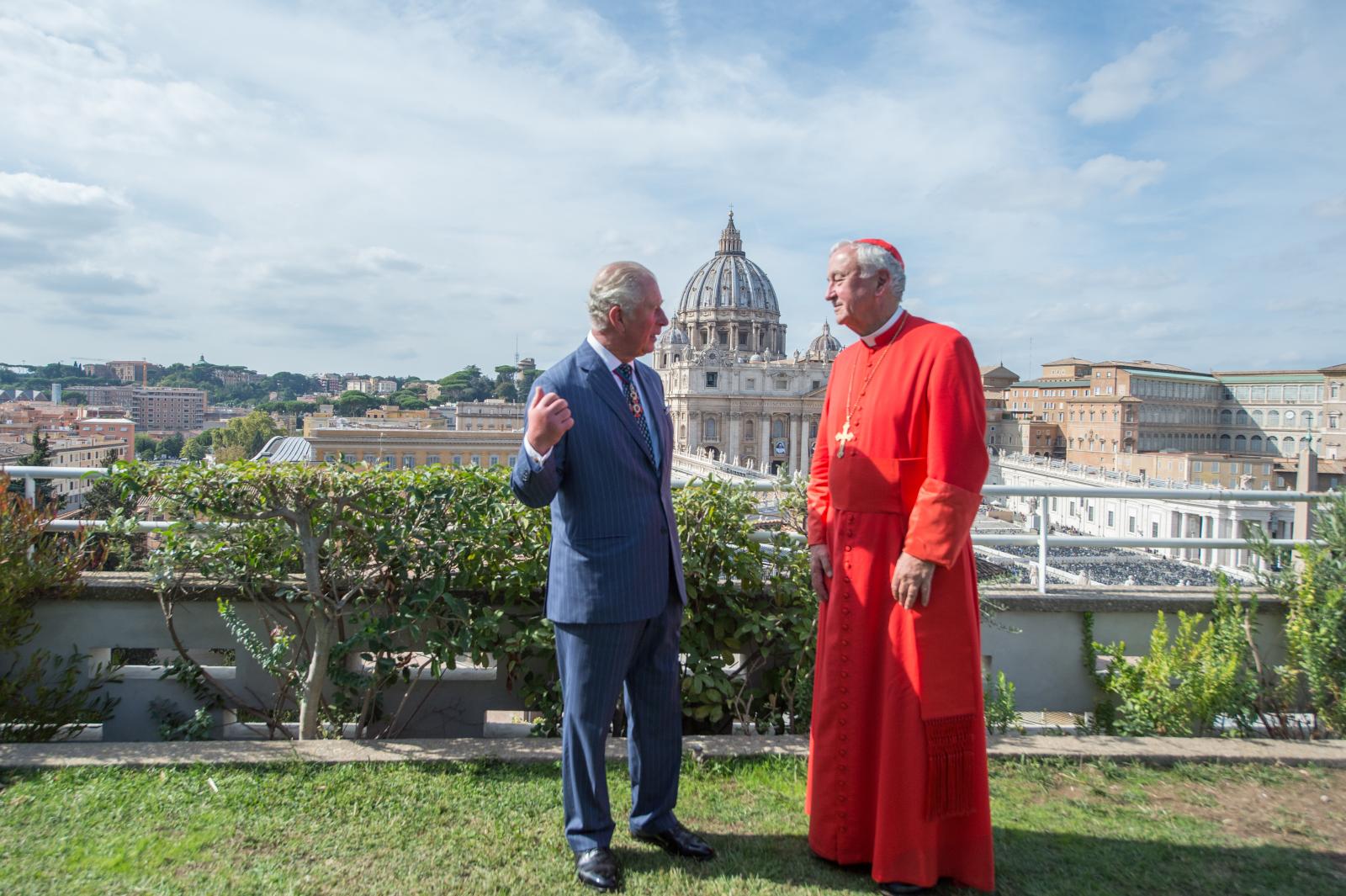
Photo: Mazur/CBCEW.org.uk