
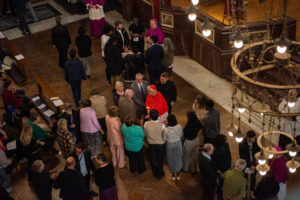
In his first Apostolic Exhortation, Dilexi te, Pope Leo XIV powerfully reinforced the role of charity at “the burning heart of the Church’s mission” (§15). In a time when social action has been burdened by political and ideological associations, consigned to the government, or simply dismissed, our new Holy Father reminds us that service is a defining aspect of our faith—in our time as in every other.
Our diocese spans London’s wealthiest and most deprived areas, and we see first-hand the “many forms of poverty” of which Pope Leo speaks (Dilexi te, §9). We also see the many faces of charity present all around us: long-serving parishioners, eager young volunteers and local Catholic initiatives bringing Christ’s love to people of all faiths and none.
500
social action projects running across parishes and schools in our diocese
28,934
people estimated to have been supported by these projects
35%
of all parish projects are weekly social action programmes
32,894
volunteer role assignments recorded across 203 parishes
“It Is Who I Am”
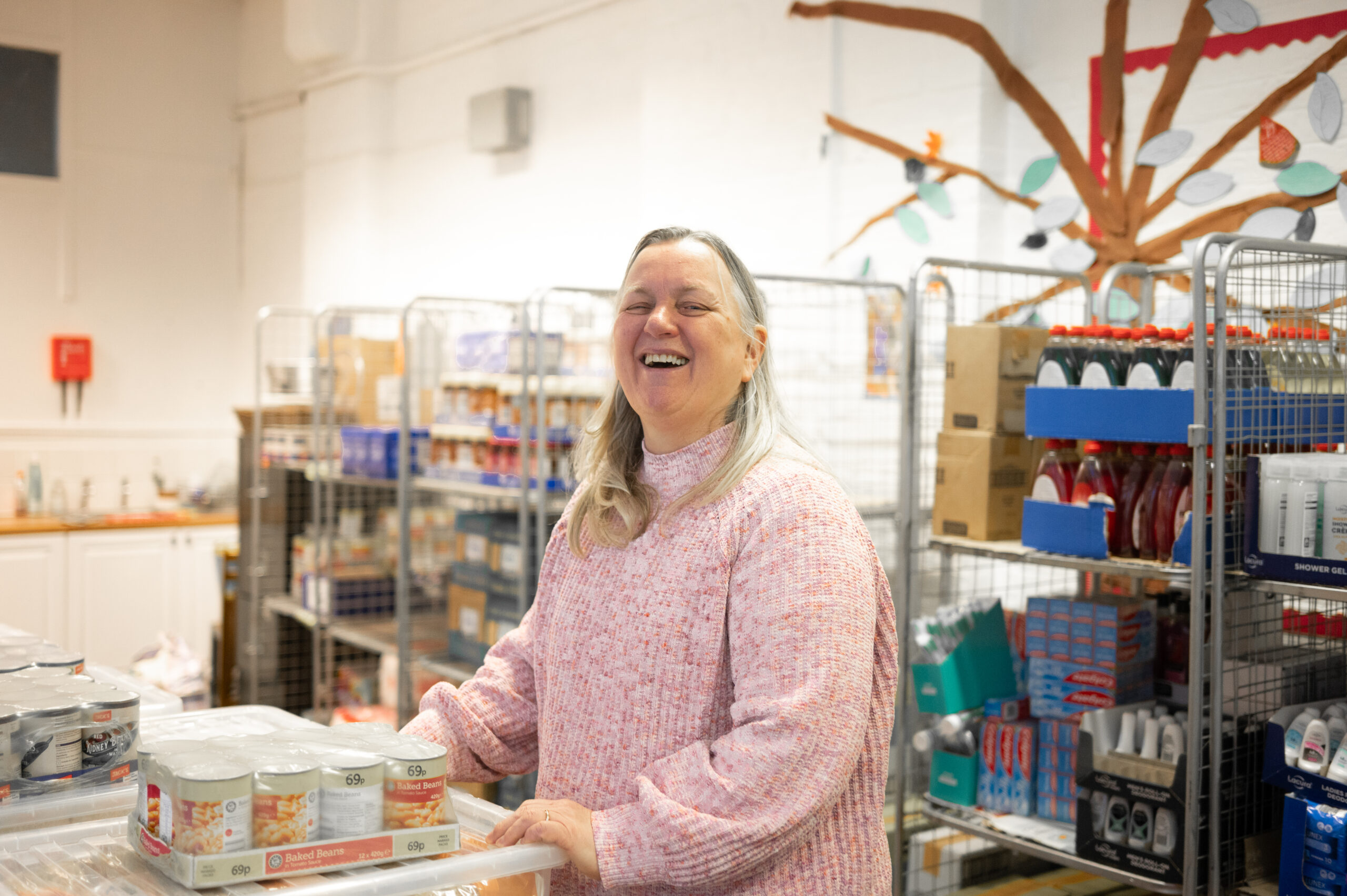
One of these faces is Jacqueline Ugoala, first prize winner in the prestigious Lifetime Achievement category at Caritas Westminster’s annual Volunteering Awards. For over 40 years, Jacqueline has been involved in every aspect of parish life at Sacred Heart of Jesus in Holloway: from leading youth groups and Confirmation classes to fundraising events, serving on the parish finance committee, and helping to establish the Sacred Heart Foodbank, now an independent charity supporting more than 65 households each week.
For Jacqueline, faith and service are inseparably linked. From a young age, she tells us, the Church meant “connection… it felt like a ‘doing’ thing rather than just come, pray and go.”
Jacqueline has devoted decades to Jesus’ invitation to “go, and do likewise” (Luke 10:37). As a foster parent for 20 years, she welcomed more than 200 children into her home, living out in present-day Camden the same call to welcome the stranger that Christ preached on the Mount of Olives (Matthew 25:35).
When asked how her faith had motivated a lifetime of self-gift, Jacqueline’s response was surprisingly matter-of-fact:
“It’s who I am—I can’t not. My faith is me, and I’m my faith; I can’t really separate them.”
Jacqueline’s answer is telling. Like the many unsung heroes in our communities, she reminds us that extraordinary acts of charity stem from one simple yet life-changing commitment: believing that “nothing is impossible with God” (Luke 1:37).
The Voice of Charity
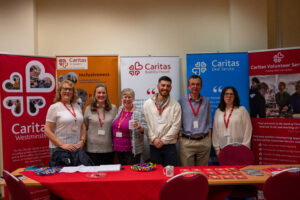
The phrase “love thy neighbour” has long been part of common parlance, but we know that genuine Christian charity is nothing short of radical. That is why Caritas Westminster—the diocese’s charitable agency—works to foster a culture of social action, where Catholics are known for the depth and extent of their service to the community.
One way Caritas does this is by supporting charitable initiatives in diocesan parishes and schools, harnessing the power of local communities to discern and respond to local needs. In September, Caritas coordinated a community health check day at the Shrine of Our Lady of Willesden, where people facing difficulties accessing local health services could receive free NHS check-ups.
Organised in partnership with Brent Council, the Shrine’s dean and the parish St Vincent de Paul group, the event enabled more than 50 people to access a range of medical services, as well as youth and housing-related support available in the parish hall.
One attendee commented:
“The range of free health checks and advice was impressive… [and] having a ‘Children and Young People’ Team onsite was a thoughtful touch that showed a commitment to serving the whole family. It’s a wonderful example of community engagement and support.”
Alongside empowering charity at the local level, Caritas Westminster also seeks to set the example for how the Church undertakes charitable work and to model authentic expressions of Catholic Social Teaching in our diocese today. Its direct services are a testament to this mission, offering person-centred, faith-informed support to some of the most vulnerable in society: people with intellectual disabilities, the Deaf community, those facing socio-economic inequality, and survivors of human trafficking and domestic abuse.
We do not stop there. In July, Caritas Westminster hosted a landmark national conference, aiming to bring the Church’s ethos of relationship and communion to the property sector. Inspired by the themes of Isaiah 61, it brought together experts and senior leaders from the faith, charity, academic, civil and property sectors to discuss how unused church property can be given new life for community benefit.
Among the successful projects presented was Caritas Westminster’s own Seeds Hub: an unused parish social club transformed into a start-up incubator for entrepreneurs experiencing economic barriers.
In his opening address, Lord Khan of Burnley, former Minister for Faith, Communities and Resettlement, observed:
“Places of worship are not relics of the past, but living, breathing assets in the present. They remain places of warmth, welcome and belonging, just as they always have. But today, they also deliver essential services; meeting daily needs, reducing isolation and strengthening local life.”
As the Mystical Body of Christ, the Church instinctively knows this to be true. Meeting daily needs, reducing isolation and serving the marginalised are, as Pope Leo affirms, “not optional but a requirement of true worship” (Dilexi te, §42).
This is why charity is at the heart of the diocese’s mission. Like Jacqueline, Deacon Paul, and thousands of others who make up the Church in Westminster, caritas is not simply something we do; it is who we are.