

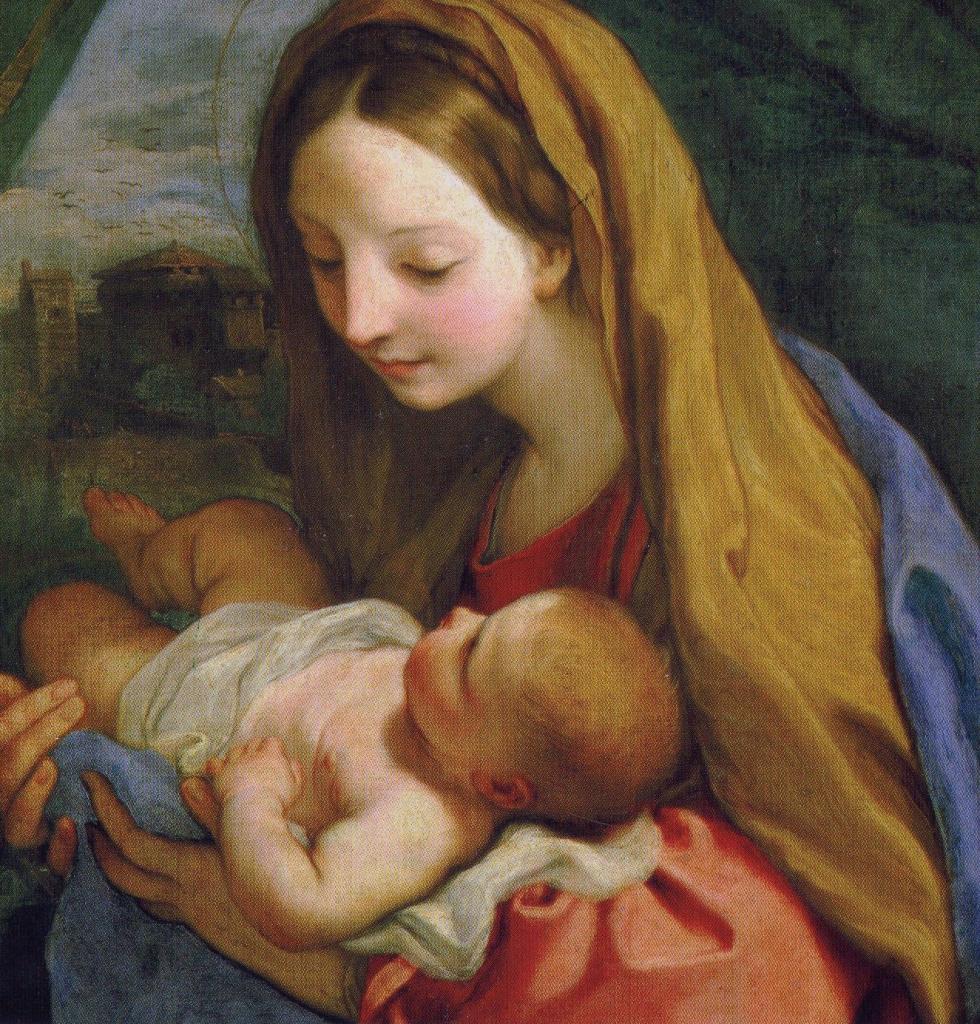
I seem to have a two-month delay on my blog-postings so far! During these grace-filled days of Christmas we have been invited to be held in God’s love and trust for us, expressed most powerfully in the Incarnation of Christ – the God who created the world with his own hands placing himself with total vulnerability into our human hands. Here are some related thoughts on what it means to love as God loves – “to the end” from last November…
“Jesus gave a loud cry and breathed his last. And the veil of the Sanctuary was torn in two from top to bottom. The centurion, who was standing in front of him, had seen how he had died, and he said, ‘In truth this man was a son of God’” (Mark, 15: 37-39)
These are the last lines of the Gospel given to us on All Souls’ Day – a day which reminds us of our mission to pray for the Holy Souls on their journey back to God through purgatory. At a time in our society when the subject of death, and what lies beyond it, is either an unspoken taboo or presented in the grotesque form of ghouls and zombies at Halloween, Christianity publicly celebrates the hope in death, the promise of eternal life won for us through Christ’s own death and resurrection. In Mark’s words above, we see that precisely at the seemingly darkest hour of Jesus’ final breath and death on the cross, there is an immediate new dawn – shown in the tearing down of the Sanctuary curtain which had separated all but the high priest from God’s presence and the profession of faith of the Roman centurion. Suffering, no matter how apparently meaningless, leads to salvation if offered to God, if united with Christ’s own redeeming suffering.
I have been struck since the beginning of November by posters all over London’s tube stations showing an aged couple gazing lovingly into each others’ eyes in a film entitled “Amour”, winner of this year’s Palme d’Or at Cannes. Amidst all the other film posters of bright young things from James Bond to the heroes of the final instalment of the seemingly endless “Twilight” series, this is a very arresting and intriguing image. This week the reviews of “Amour”, directed by the acclaimed Michael Haneke, appeared in the press with many critics awarding it the maximum five stars and describing it as a “tender masterpiece”. I duly bought my ticket and sat back in the gloom of Notting Hill’s Picturehouse cinema to receive Haneke’s reflection on love in the face of death.
For much of the film we are led to admire the courage and care which an elderly man, Georges, shows to his beloved wife, Anne, following a stroke which leaves her increasingly paralysed and dependent. She begs him not to put her into care but to allow her the comfort of spending her final days in her own home. The film graphically shows the gruelling progression of her illness and the toll it takes on both of them. It is a real testimony to the vow to “love in sickness and in health”. But then Georges’ strength and endurance snap and he smothers his wife to death, leaving both himself and the audience totally numb and desolate. There is no comfort, no hope in such a death. Death has triumphed and now hangs over all like a cloud of impenetrable gloom. It is significant that there seems to be no place for God in their relationship – the only sign of faith we see is an old photograph of Anne as a child wearing a First Holy Communion. God seems to have faded from their lives like the colours of the photograph. Their love for each other is impressive and touching but this purely human love finally seems to be exhausted – by himself Georges does not have the strength to accompany Anne to the end, “till death do us part.”
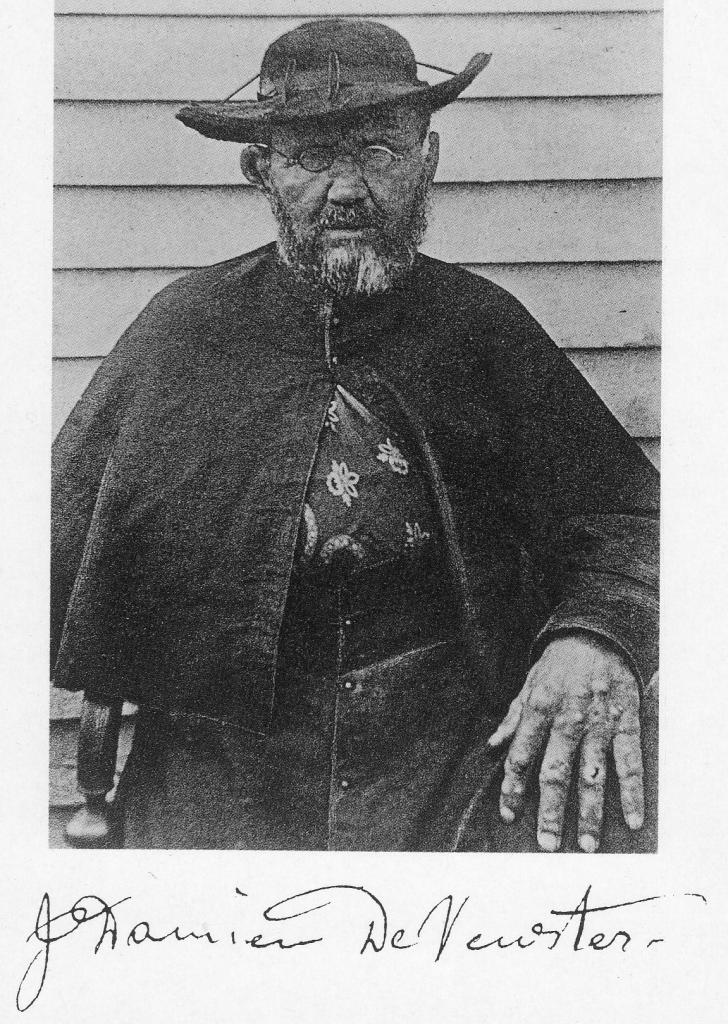
The film has made me think very much of St Damien of Molokai – a saint who has entered into my life in many different ways over the last year. His story is truly remarkable – a Sacred Heart Father from Belgium who sailed to Hawaii as a missionary in his early 20’s in 1873 and who, after several years, volunteered himself as chaplain to the colony of lepers exiled to the isolated island of Molokai. Here the men, women and children were literally left to rot in conditions which deprived them of all human dignity.
Damien began his ministry to them by giving proper Christian burials to the dead, who before had simply been dumped in shallow pits to be eaten by wild pigs. Damien instinctively understood that if the lepers could understand that death has purpose and hope then their lives on earth and how they lived them still have meaning. His total dedication to care for their physical and spiritual needs transformed the colony from a hell on earth to a true community of faith. And Damien, who was left alone in this ministry for most of the following 16 years, made it clear that he drew the strength he needed for this great mission from Christ’s presence in the Eucharist. Unlike Georges, when his own strength failed Damien had the greater power of his Saviour to help him “love to the end” – a love which led Damien, who himself contracted leprosy and died among his beloved lepers, to offer his own life, like Christ, for the salvation of others.
What does our vocation to be a follower of the Christ-child mean? It means, in essence, that each of us responds to God’s calling in the uniqueness of our own life’s journey, to love, like Christ, “to the end”.