
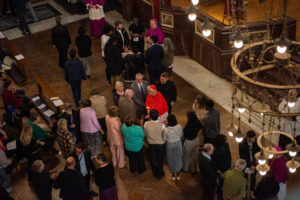
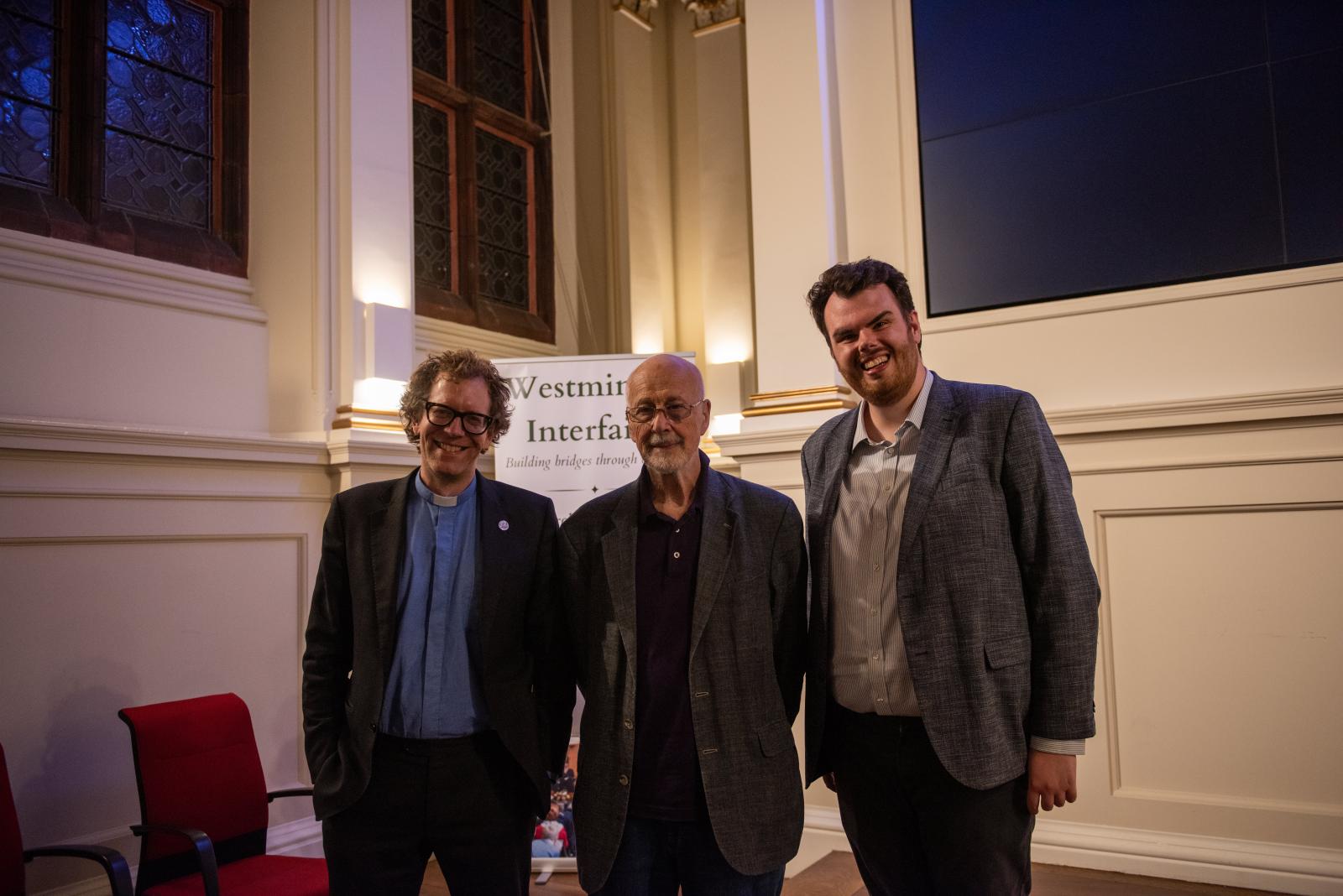
On Thursday 19 September, Westminster Interfaith hosted a joint event with the Council of Christians and Jews (CCJ) entitled, ‘God of Compassion: The Psalms in Conversation’.
As Pope John Paul II noted in 1986, ‘The church of Christ discovers her “bond” with Judaism by “searching into her own mystery”. The Jewish religion is not ‘extrinsic’ to us, but in a certain way ‘intrinsic’ to our own religion’.
This event, therefore, celebrated the roots of our shared scripture and demonstrated that a Jewish understanding of the Psalms can enrich a Christian understanding of God.
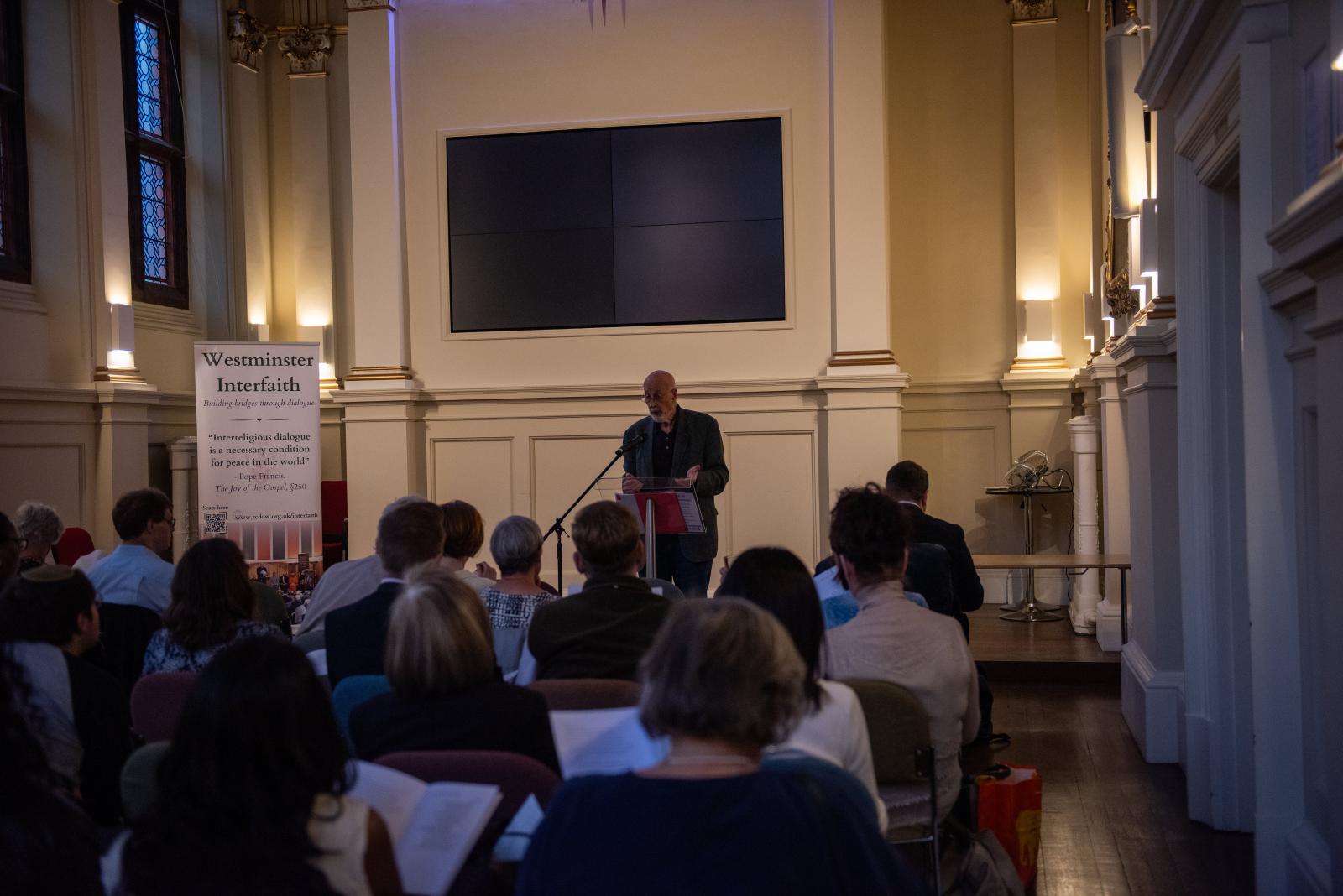
After an introduction by CCJ’s Co-Director Nathan Eddy, Rabbi Jonathan Magonet (Professor Emeritus of Bible at Leo Baeck College) lead us through Psalms 103 & 145, taking us back to the Hebrew and revealing aspects of this scripture that are often lost when read in English.
Both these Psalms are a response to Exodus 34:6-7 and demonstrate contrasting views of God’s compassion.
Psalm 145 is an alphabetic acrostic poem, starting with Aleph (×), the first letter of the Hebrew alphabet. This Psalm’s structure tells us about the nature of God: the first half is about our relationship to God (‘Every day I will bless you, and praise your name forever and ever’, v. 2), leading to an affirmation in the middle that God is King (‘Your kingdom is an everlasting kingdom’, v. 13), from which follows God’s relationship to us (‘The Lord is near to all who call on him’, v. 18).
Psalm 145, therefore, demonstrates a transactional view of God, one where we praise Him, for He is King, and He looks after us. In contrast, Psalm 103 lays out a relational view of God’s love for us, challenging the verse in Exodus and stating that ‘nor will he (the Lord) keep his anger forever’ (v. 9). It dares to hope in a God of mercy and compassion, one whose ‘throne is in the heavens’ (v. 19) and yet ‘is merciful and gracious’ (v. 8) to us.
Rabbi Jonathan drew together these Psalms and left us with a challenge – if we believe scripture to be true, then we must sit with both these transactional and relational aspects of God’s compassion, as depicted in the Psalms.
The talk was followed by a Q&A and a drinks reception, presenting the opportunity for those in attendance to meet Christians and Jews who live in the Diocese.
If you’d like to find out more about the work of Westminster Interfaith, please click here.