
By Fr David Stewart SJ
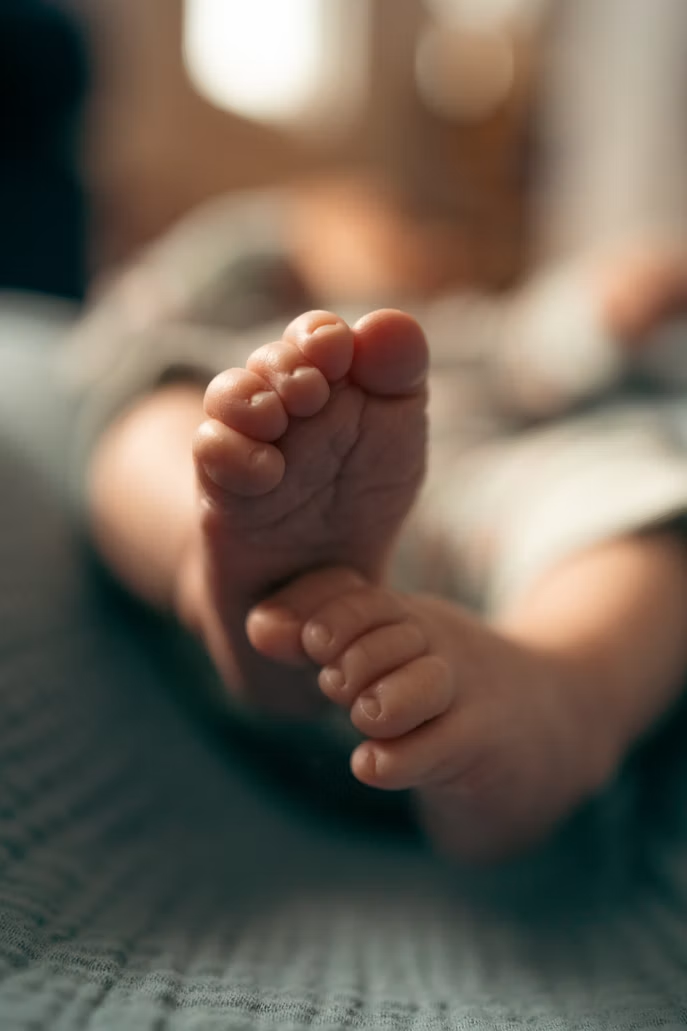
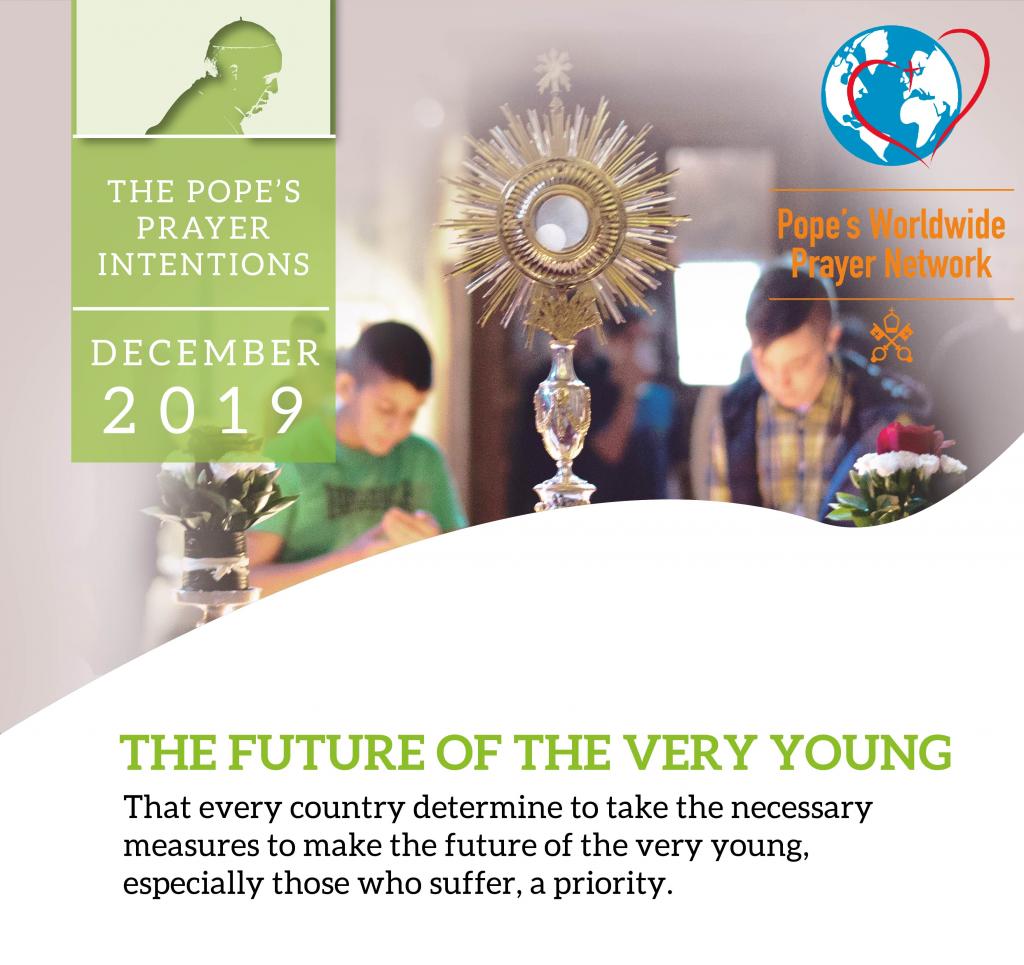
Education is a human right. In 1948, the United Nations Declaration on Human Rights enshrined the right in international law. Denial of education is one way in which the young suffer through no fault of their own. The very young, less visible, with no power, unable to speak for themselves, suffer greatly in many parts of our world, for various reasons including denial of education. This month, in his prayer intention, entrusted to his personal worldwide prayer network, Pope Francis invites all of us to pray with him ‘that every country determine to take the necessary measures to make the future of the very young, especially those who suffer, a priority’.
Since that declaration, other major international conventions have confirmed that every country must provide education, starting with the very young. Yet many countries, not least those in the Majority World, still crippled with debt owed to the rich North, struggle to meet this requirement. Three years ago, the United Nations launched the Sustainable Development Goals (SDGs), tough but practical, necessary proposals for every country to eradicate poverty while redirecting policy towards sustainability; a plan to ‘heal and secure our planet’ that the young will inherit. These SDGs demand that no-one be left behind. As Pope Francis pointed out to a young gathering before last year’s Synod On Young People, ‘too often the world treats young people as “disposable” by not providing an adequate education or job opportunities’.
It is not just the denial of education that affects the very young and their futures; our world makes them suffer in other ways. To echo the words of the intention, alleviation of their suffering is, too often, far from a priority. The December intention invites us to pray for, and to work for, this prioritisation. We need never to forget that even very young children are still living in extreme poverty. This is true of our so-called advanced civilisations, not only the Global South. Others are victims of trafficking, another blight on our societies. Others are forced to become child soldiers. Images of young children bearing heavy weapons are obscene pictures that shame us all. In each of these unacceptable situations, decent education is absent. What futures will these children have?
Pray … and act!
It is impossible to read the Gospels without recognising two essential calls on us. Firstly, that every marginalised person must be part of our prayer and secondly, that our prayer must always lead to action, or at the very least to prepare our hearts, mobilise ourselves, to do good, starting with those on the margins. Jesus concluded the parable of the Good Samaritan with the simple, stark injunction, ‘go and do likewise’. Saint Oscar Romeo, preaching not long before his assassination, declared that ‘besides reading the Bible, the Word of God, a Christian who is faithful to that Word, must also read the signs of the times, current events, to illumine them with that Word’. The Pope’s December intention invites us to engage in such a reading and to ask, ‘how am I called to illumine the future of the very young?’
A festive season?
Christmas, we are frantically told by media and advertising, is a time for children. However, not all children are part of the tinselly picture. Neither is Mary’s child, through whose life, death and resurrection we are called to mission. This Christmas, we can resolve to echo in our own lives and prayer the Pope’s petition that each country give young people a future and a meaningful life, which is everyone’s human and divine right.
The Pope’s Worldwide Prayer Network, legally based in the Vatican City State, has its UK base at St Ignatius Jesuit Church, Stamford Hill, London N15. Our App, Click-to-Pray (www.clicktopray.org), gives you a new set of prayers every day.