Following the celebration of its 25th anniversary earlier this week, Nikki Dhillon Keane, founder of Signs of Hope, offers a personal reflection on the evolution of our counselling service for the Deaf community.
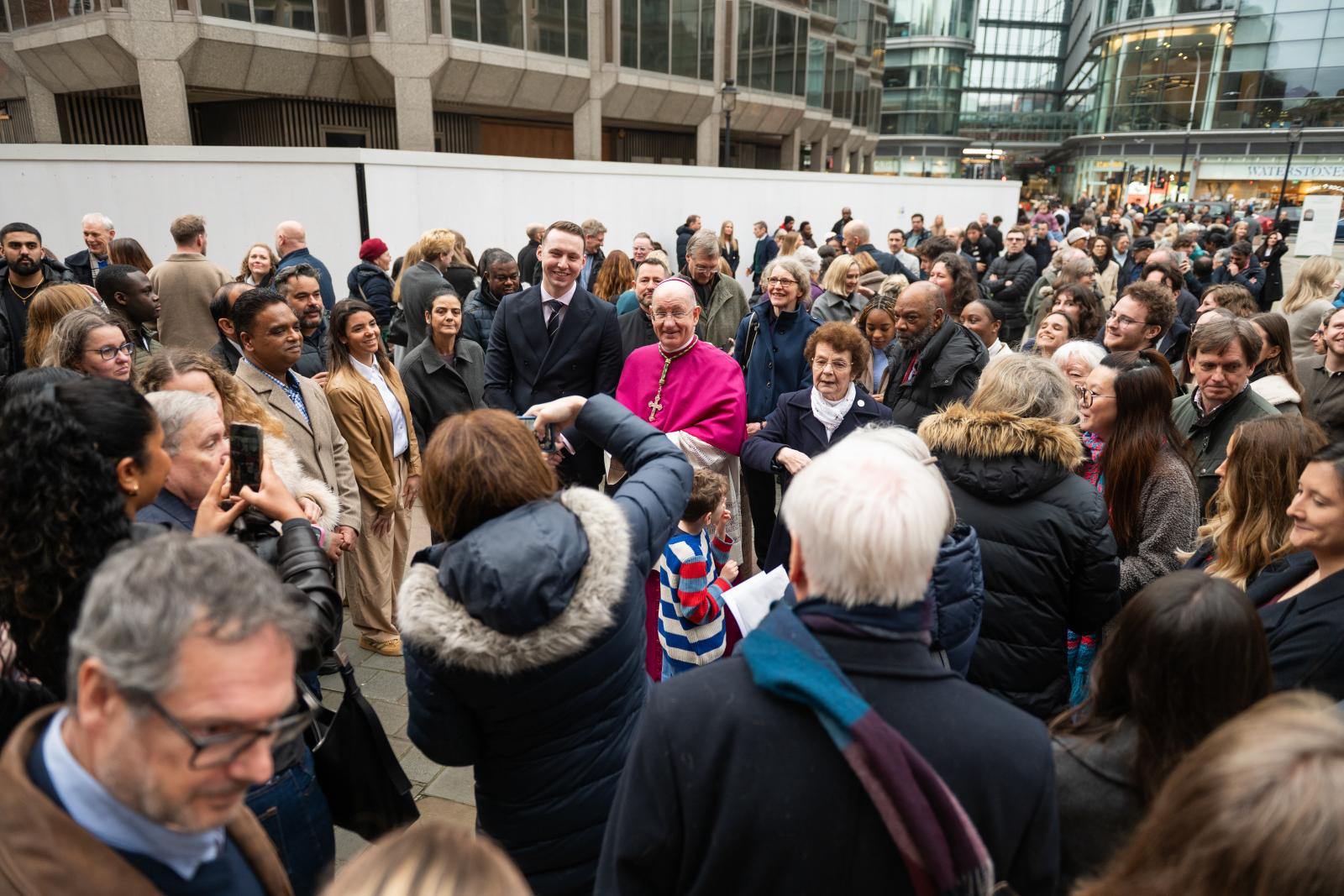
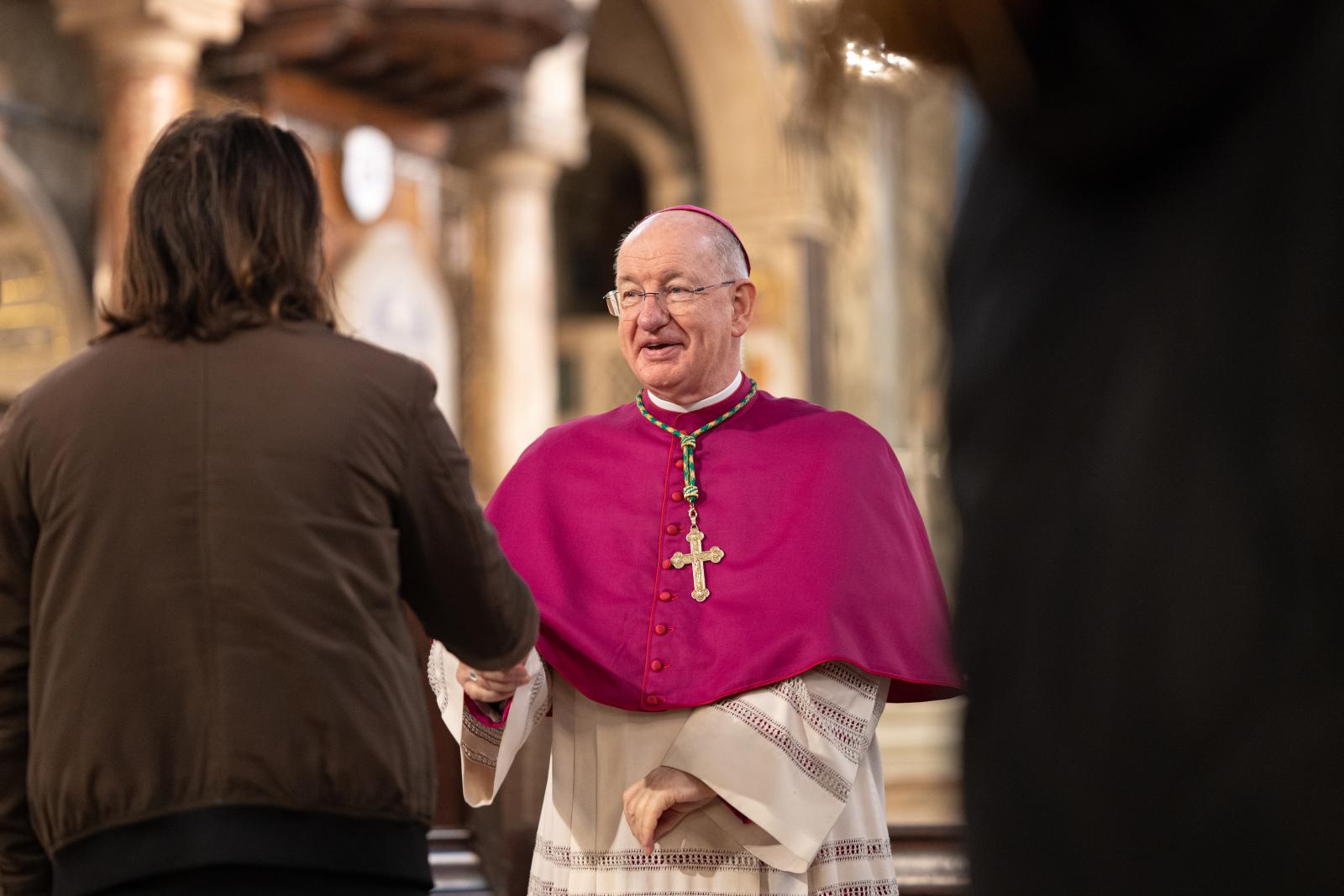
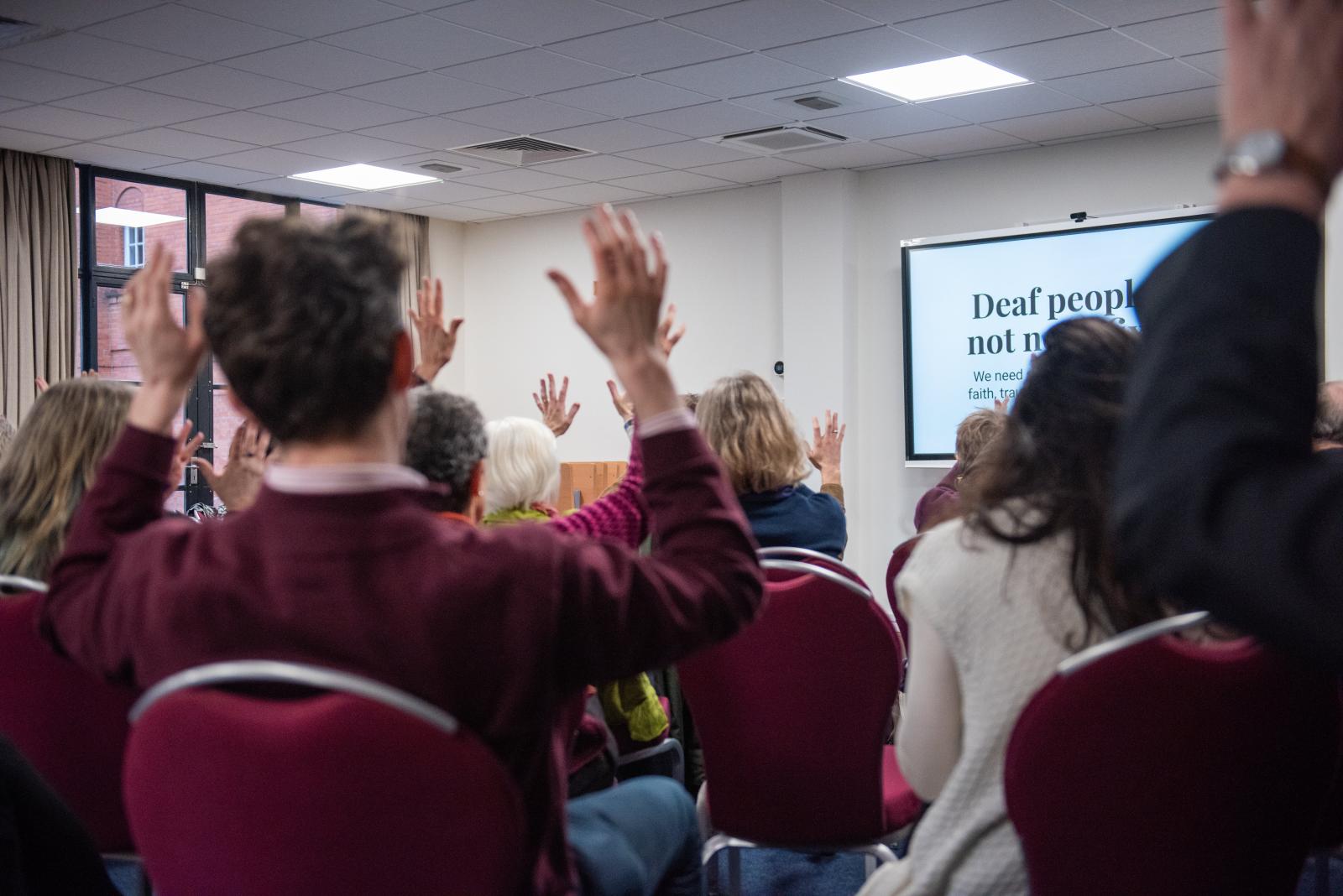
On 26 January, an unlikely mix of Deaf psychotherapists and counsellors, clergy, Caritas Westminster staff and well-wishers gathered together to celebrate 25 years of the Signs of Hope Counselling Service.
‘Something needed to be done’
Back in 2001, I was leading the work of what was then called Westminster Diocese Deaf Service — now the Caritas Deaf Service. As a newly-qualified therapist, I was acutely aware of the lack of access to counselling and psychotherapy for Deaf people, particularly British Sign Language users, and decided that something needed to be done.
With the help of Canon Shaun Lennard — one of our priests who regularly celebrated Mass in Sign Language — and a member of the Westminster Diocese Pastoral Board, we started a small counselling service offering support to Deaf people of all faiths and none. Signs of Hope was one of the first counselling services to offer support directly in British Sign Language, without the need for interpreters.
Fr Shaun offered a room at his parish in Islington; where some of our work still takes place 25 years and several parish priests later. This meant that we could keep the work separate from the main Deaf Service and maintain confidentiality; not an easy thing to do in such a close community.
We wrote letters to local social workers and GPs to let them know we were here, and waited for the clients to come. It didn’t take long: the need for support in their own language, with an understanding of Deaf culture and lived experience, was huge.
I learnt more from my clients than I could have imagined. I was still a fairly new practicioner and not too set in my ways, so I was able to adapt to the needs of this community and develop new ways of working; it all happened very organically.
It soon became clear that for many of my clients, faith and spirituality had a significant impact on mental and emotional wellbeing. Clients needed to explore faith as a positive, supportive factor in their lives, but some of them also needed a safe space to explore challenging experiences of religious or spiritual abuse. 25 years later, Signs of Hope remains the only UK counselling service to offer Faith-literate therapy in British Sign Language.
As time went on, more Deaf practitioners were managing to navigate the many barriers they faced to train and qualify in courses designed for hearing students. Signs of Hope was able to support some of them; one in particular was very able, and once qualified worked with us as a practitioner.
‘We know this saved lives’
In 2010, we were fortunate to receive a grant from the Plater Trust, which we used to develop a series of Life Skills workshops addressing the challenges most commonly flagged by our clients: confidence building, relationship skills and anger management. The material was focused on Deaf experiences, knowing one’s right to have an interpreter, interacting with hearing friends and family, boundaries and assertiveness.
With Deaf women twice as likely to be subjected to domestic abuse as their hearing peers, the programmes also covered how to recognise abuse and what to do if you have been sexually assaulted. Sadly, we found that this information was needed frequently, and some of the feedback was chilling.
Suicide rates are also higher in the Deaf community, and particularly back then Deaf people had much less access to support. Responding to this, we also created resources around suicidal feelings, suggested some ways Deaf people could support each other through the “Life Buddy” system. We know this saved lives.
The Life Skills programme is still the only one of its kind in the UK, and the BSL videos we created to go with our workshops are still available on YouTube and used by Deaf practitioners and clients around the UK.
Despite ongoing barriers to accessing training, the number of Deaf practitioners is increasing. In addition to providing BSL therapy, Signs of Hope is now developing support for Deaf practitioners, providing training events and clinical supervision in Sign Langauge. We have partnered with the Deaf Counselling Network a Deaf-led UK network of Deaf and Signing practitioners, hosting bi-annual meetings with them to discuss issues and challenges in the Deaf therapy world.
More recently, Signs of Hope is involved in running a think tank, where we collaborate with some of the most experienced Deaf practitioners in the UK to develop a Deaf-Centred approach to therapy.
From accessibility to authenticity
Over the last 25 years, Deaf-Accessible therapy —where access is provided through an interpreter — has been replaced by Deaf-Aware therapy; provision of therapy directly in BSL, with an understanding of the Deaf community’s culture and unique issues.
Deaf-Centred therapy goes one step further: rather than adapting a therapeutic model created by and for hearing people, a Deaf-Centred approach is a therapeutic model created by Deaf professionals, for Deaf people. The applications of a Deaf-Centred approach are more far-reaching than therapeutic practice.
One of the things that has changed over the years is the understanding of the importance of Deaf-led services. This means having Deaf people in our steering group, leading and monitoring our work. It also means that it’s time for me shift my focus from direct therapy to supporting and advocating for Deaf colleagues. We are currently seeking funding to employ a Deaf Counselling Manager for Signs of Hope, to lead the service into the next 25 years and sit alongside pioneering Deaf-led services like Deaf4Deaf.
Looking ahead
The road has not been smooth. Changes in the ways in which statutory mental health support is funded have led to regressions in provision, with voluntary services are left to pick up the pieces.
Deaf therapy is still widely regarded as a specialism, but without the intersectional understanding that Deaf people can also need specialist trauma care, domestic abuse support, or therapy that caters to their faith, minoritised cultural or sexual identity, disability or neurodifference. All the varied provisions available to hearing people need to be available to Deaf people too.
Signs of Hope cannot provide all of those, but we do provide faith-literate therapy and specialist support for domestic abuse, sexual violence and trauma. It is my hope that over the next 25 years, we will be able to provide more specialist support, with an expanded and Deaf-led team.