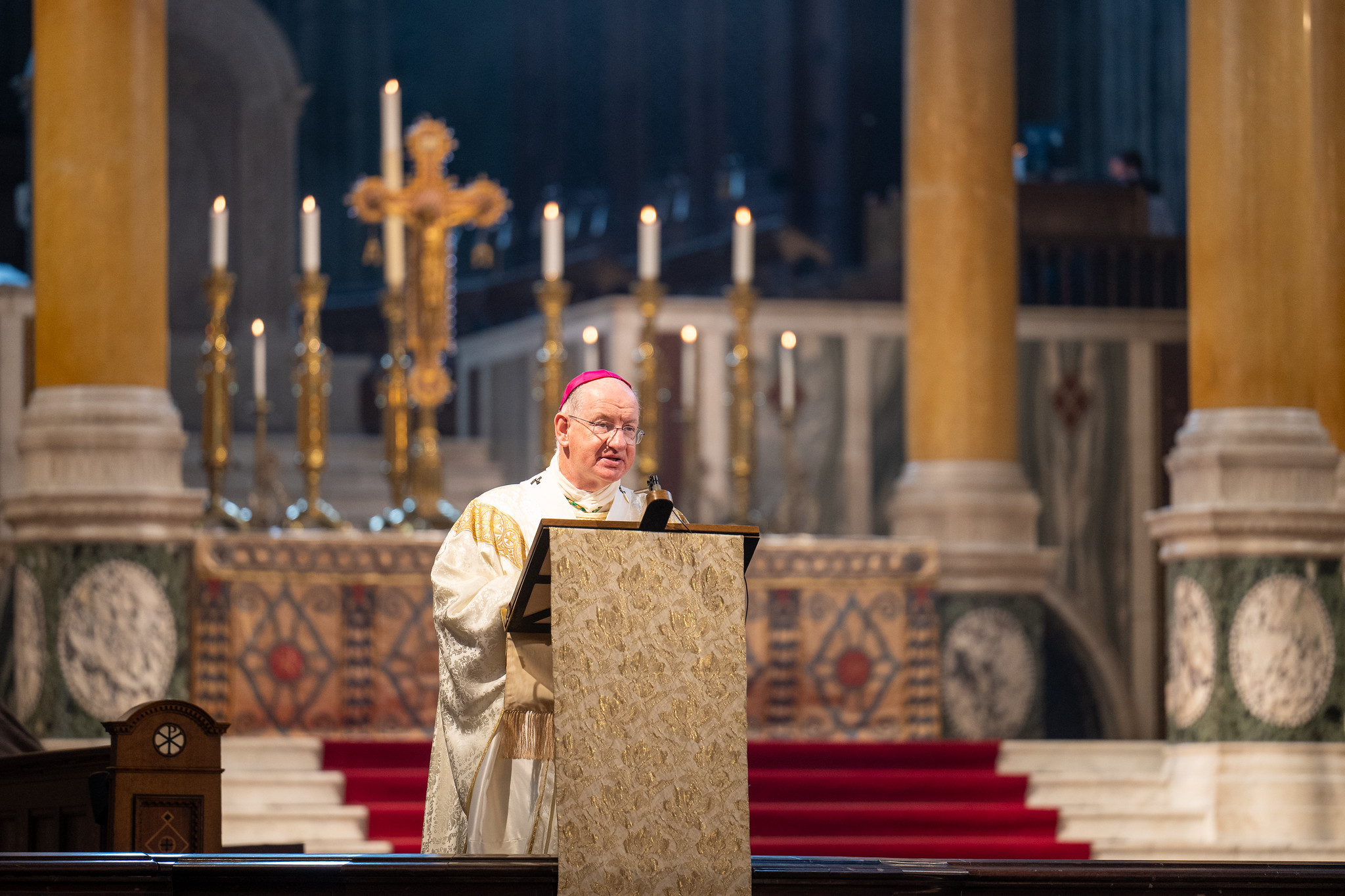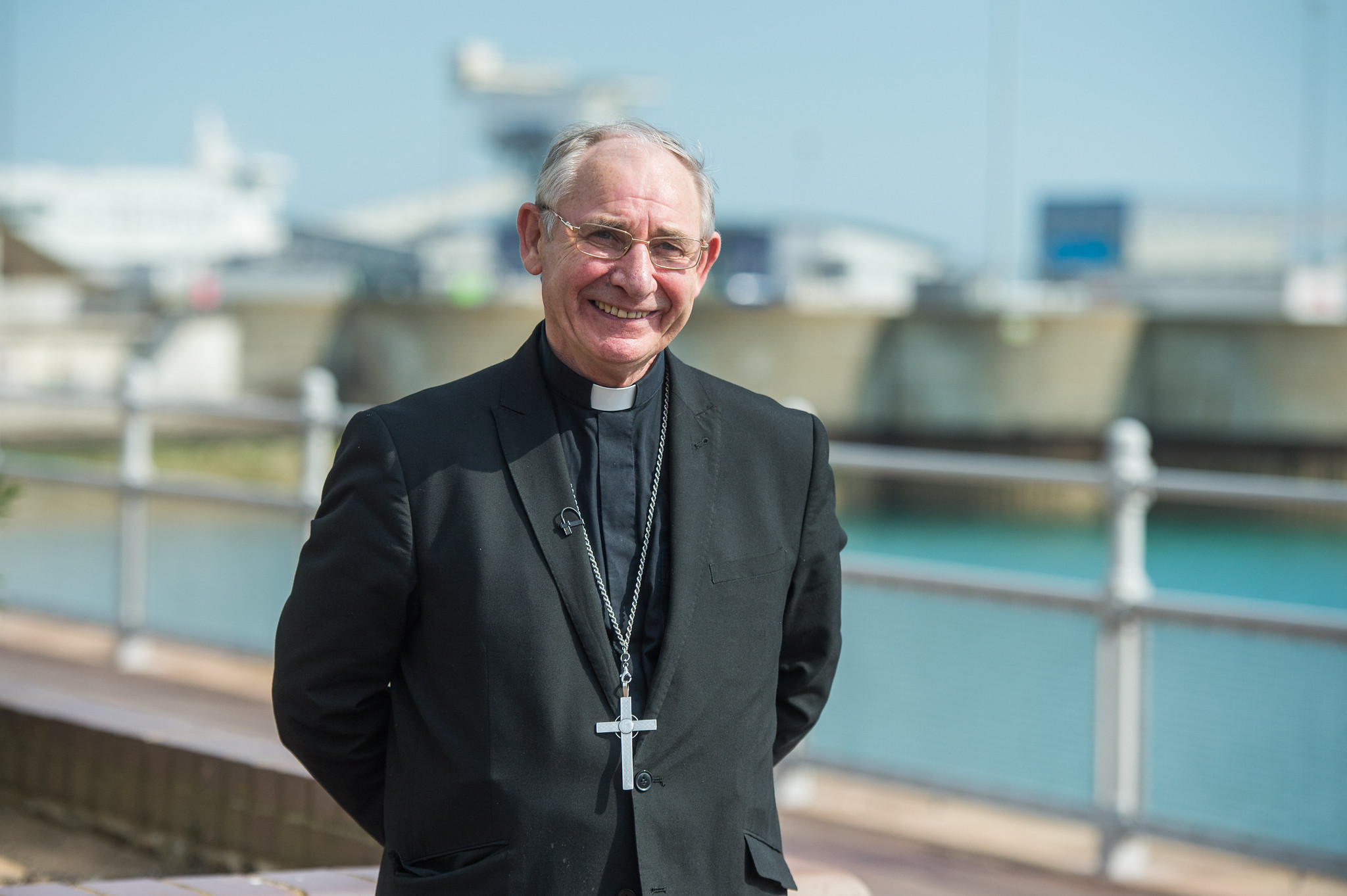

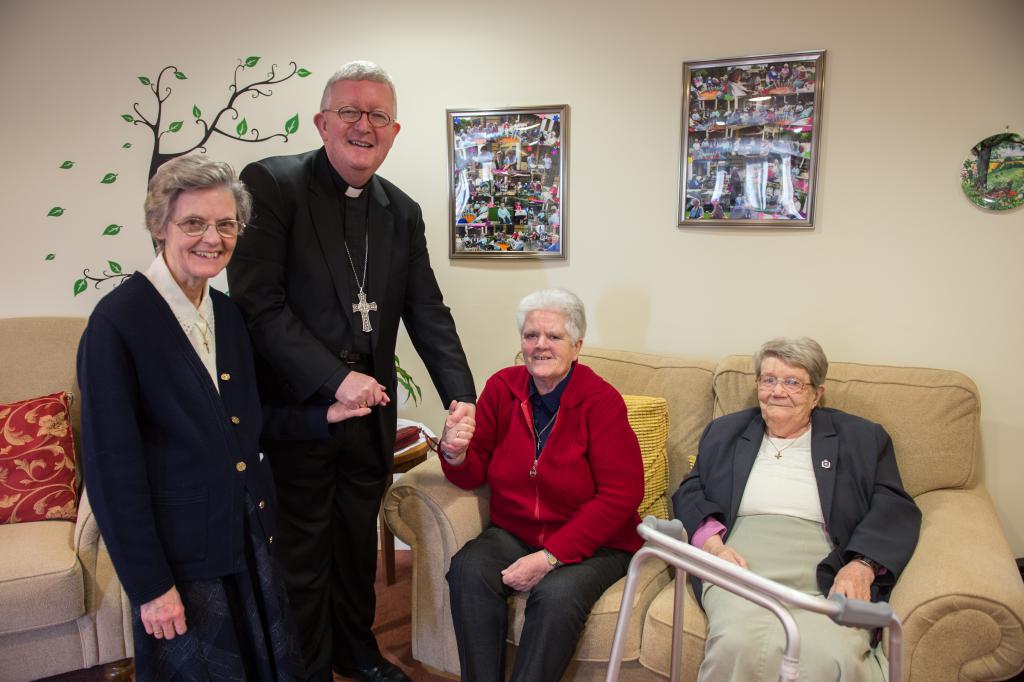
On Thursday 30th March 2017, Archbishop Bernard Longley of Birmingham visited St Joseph’s Hospice, Hackney to deliver one in a series of the hospice’s annual Lenten Lectures. Archbishop Bernard is very familiar with the work of St Joseph’s Hospice from his time as Auxiliary Bishop of Westminster.
The lecture focused on ‘service’ as its theme, which is the fourth vow professed by those entering some religious orders and which is key to the work of St Joseph’s Hospice.
Archbishop Bernard described the unique nature of service rooted in Catholic teaching which reaches out ‘to those most in need, irrespective of ethnic, cultural or religious background, political affiliation, or economic circumstances’ and which includes a willingness to serve ‘in fruitful partnership with others, where we have shared values and priorities’.
He said that ‘St Joseph’s continues to draw on the strength of its Catholic foundation. It has known how to adapt its mission and evolved in a way that I would describe as authentically Catholic. By this, I mean, that the service that arises from the love of Jesus Christ has always to be offered freely and indiscriminately’. This has enabled the hospice to be ‘at the forefront of ecumenical and interreligious cooperation and witness’.
Just ahead of Holy Week, Archbishop Bernard took this opportunity to speak about ‘the view from the cross’, asking his audience to consider how ‘Christ, in his passion, looked upon those who were around him’, essentially, what it feels like to be dying. He suggested that to view a world in the midst of suffering could make us more aware and open to the compassion that can come about during times of great distress. He also spoke of Jesus’ love and sacrifice, and how it ‘accompanies us from the first moments of our existence, throughout our childhood and youth, and all along life’s journey’. He said that comfort can be found from knowing ‘that the Lord is always at our side, at times to support and comfort us, but often too challenging us and urging us on’.
Archbishop Bernard added that ‘the way we respond to the most important moments of our lives, whether a challenge, a moment of great stress, or preparing for our own journey towards the end of our natural lives, is often a reflection of the way that we have lived, the experiences that we have had and how we have been preparing for that one great challenge that is before each one of us’.
He linked this to a key theme from the Art of Dying Well: that to live with death in mind, memento mori, is to live well and fully. Preparation for death, in its most intimate stages does not have to be without life. ‘Hospice care enables every day to be a source of joy and a channel of love. It brings meaning to the lives of all. The witness of service and prayer of the sisters and all who are united with them enhance the quality of care received by patients.
Care, prayer and life are part of the intrinsic make-up of St Joseph’s Hospice, and so many other palliative and end-of-life care institutions. For the staff, the work is life enriching, and for the patients, the end of life is enhanced and cherished. As Archbishop Bernard explained, ‘God does not take his gifts away from us. Life is for living through, with, and beyond the experience of death’.
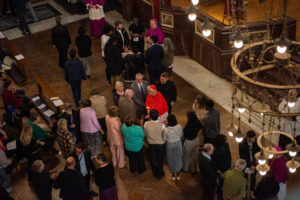
During his visit, Archbishop Bernard also celebrated Mass for the intentions of residents and staff of the hospice, and met staff, Religious Sisters of Charity, and the families of patients.
Opened in 1905 by the Religious Sisters of Charity, St Joseph’s Hospice has been a ground-breaking centre for change in the hospice care system since its foundation. It continues to be a forerunner in the field and is today an expansive, modern hospice that offers palliative care, education and research.