By Deacon Roger Carr-Jones, Marriage and Family Life Coordinator.
Many years ago, following the death of my mother, I went on a pilgrimage to visit the church where I was baptised. Unusually for the time, this took place when I was seven months old, as my father was very ill and subsequently died just three months later. I share this story because, in revisiting the place of my entry into the Christian church, it rekindles memories of my parents, the bittersweet nature of loss and a continual sense of rebirth through baptism. This memory has also provided a unifying theme for Mothering Sunday. This image of the womb is one which is not sentimental but earthy, embodied and profoundly scriptural.
We emerge and are sustained by the womb, in the process leading to birth, at the moment of our baptism and then through our Christian belonging in the Church. The womb, therefore, is an organic symbol of creation, covenant and community. When we begin to explore these rich layers of Mothering Sunday there is much that we need to be grateful for, and through which to notice the action of the divine. In speaking of the generative love of God, we can see this made real through the love of family, of the Church as a mother and in the life that we enjoy every day as a Christian.
It was in the womb that we first experience our sense of belonging and nurture, and of the manifest love of the Creator. This is captured well in Psalm 139, which says. ‘You knit me in my mother’s Womb’. The mystery of the mother carrying the child in the her womb is the most intimate way of experiencing God’s mothering us into being. The womb is dark, hidden, protective and the place where we are utterly dependent. Birth is the moment when something that was hidden emerges into the light.
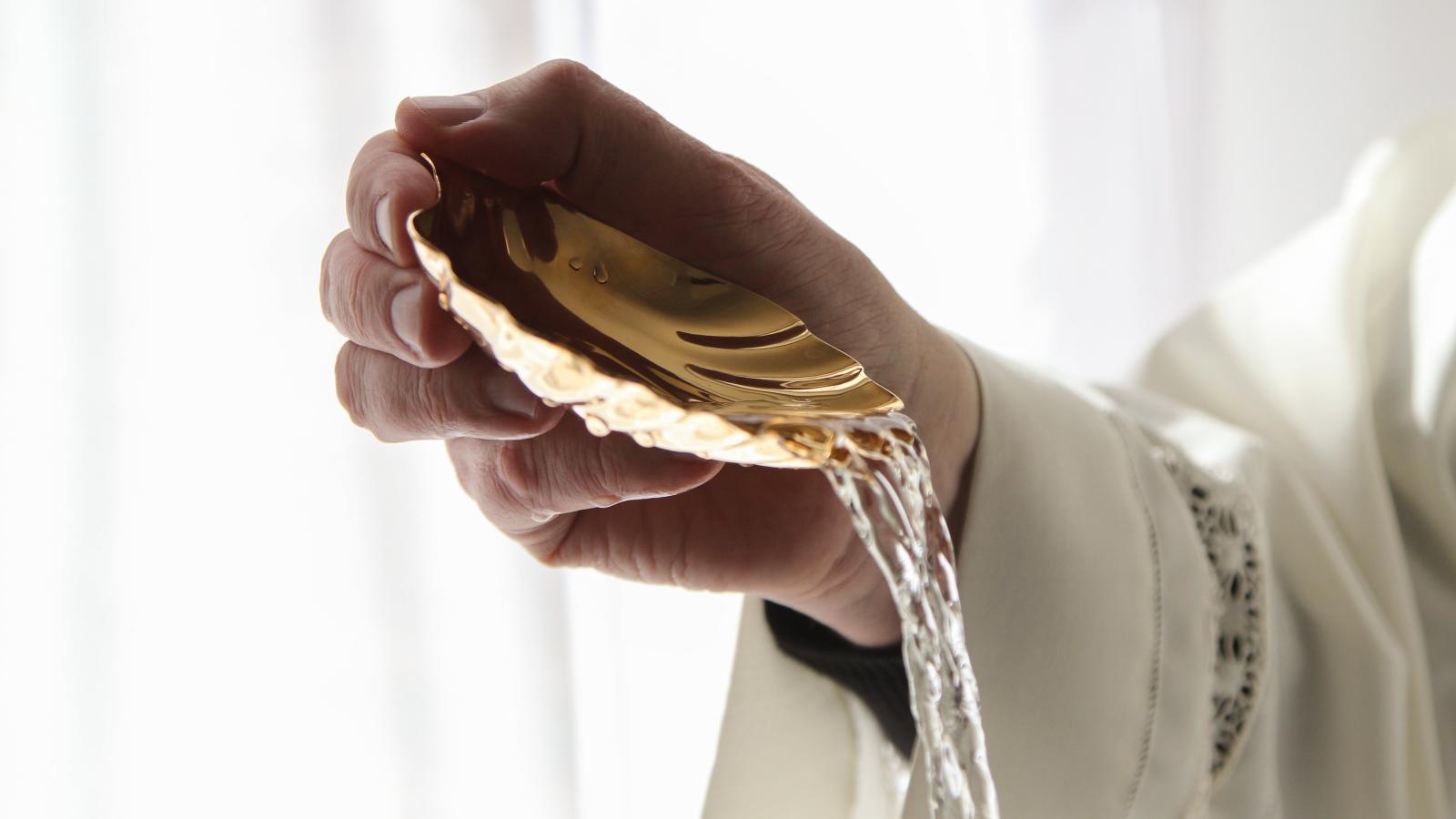
In a similar way, the baptismal font is the ‘womb of the Church’, a place of transformation where we emerge as a new creation. It is in the waters of the font that God refashions us through the Spirit. We see this mothering image of the Church vividly expressed in rite: we are named, received, and raised into a new life as a Christian. Next time you go to your baptismal church, take a moment to stand at the font, the place that connects the physicality of our birth with the sacrament’s spiritual reality: God labours us into new life.
Birth and baptism are entry points into new life. We do not choose our birth family, we receive it which, like our baptism, is gift. Mothering Sunday brings together our physical and spiritual births, and our ongoing journey of being fed, nourished and watered by our parish community.